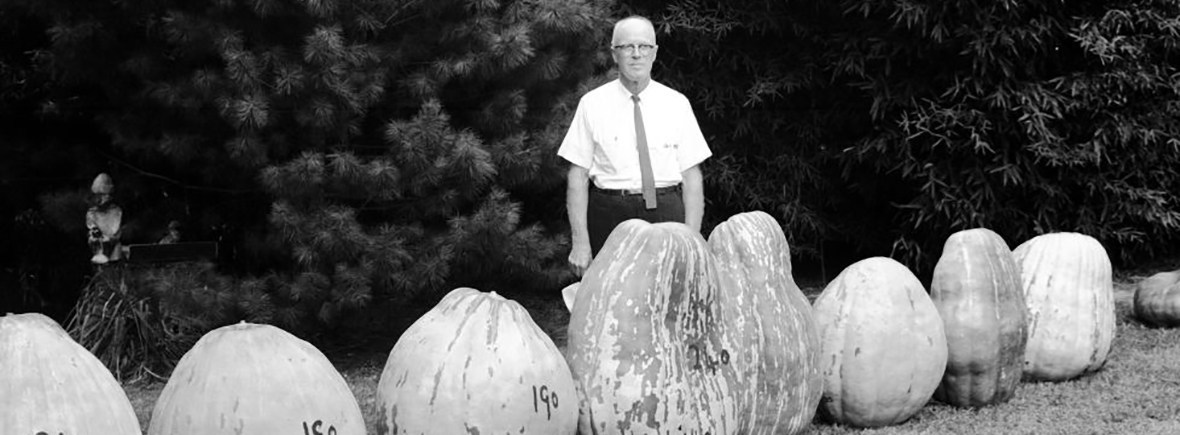
My portfolio showcases various series of paintings created throughout my career. My work tends to investigate our relationship with the natural world, its creatures, each other, and ourselves. I make social commentary with a sprinkling of humor, a titch of nonsense, a dash of self-deprecation, and a pinch of bird droppings. Please find my contact information below. Feel free to get in touch if you have any questions or would like to purchase a painting or commission one.
Tame your Marmots

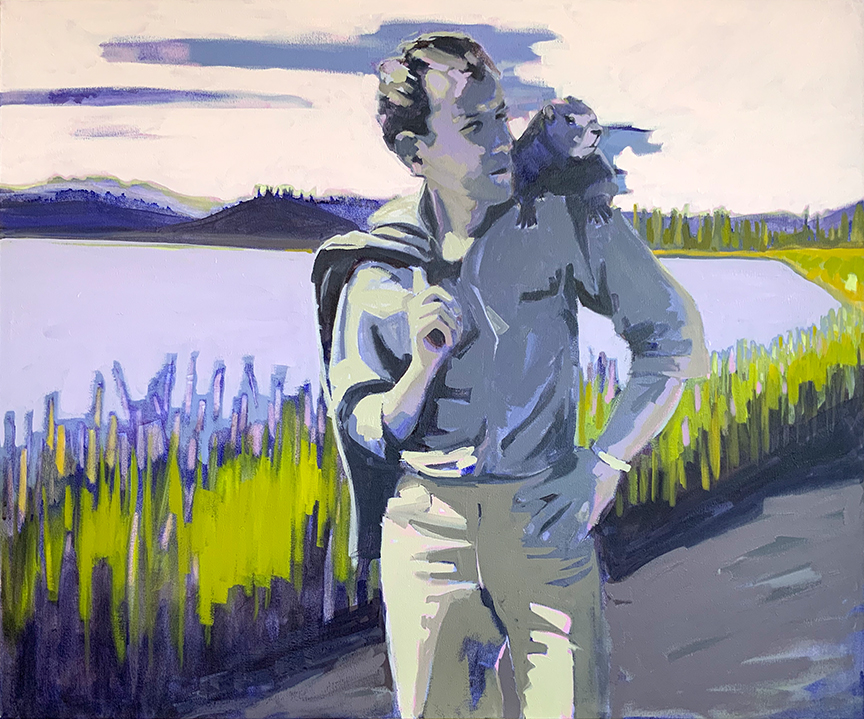
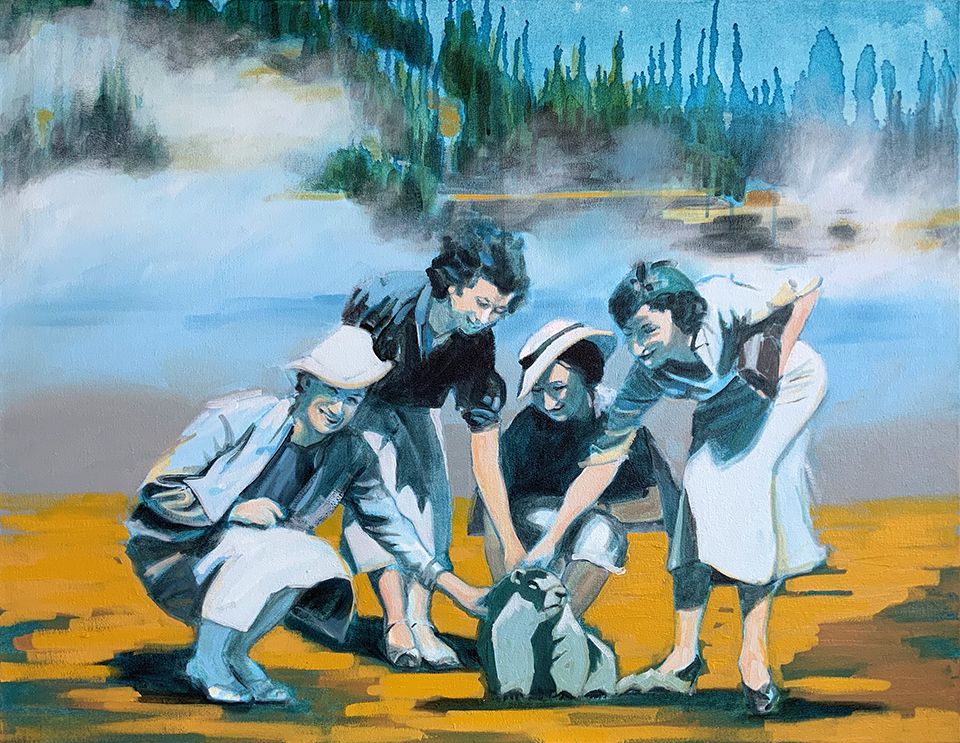


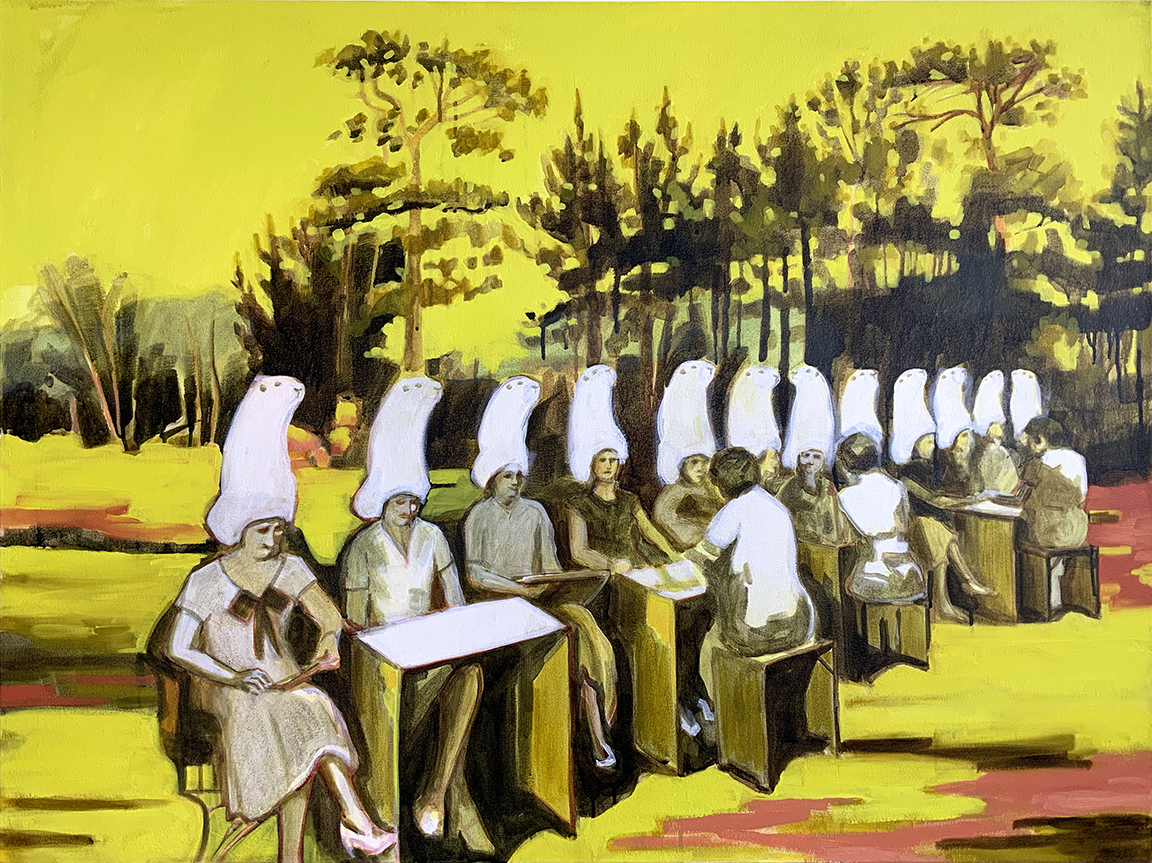
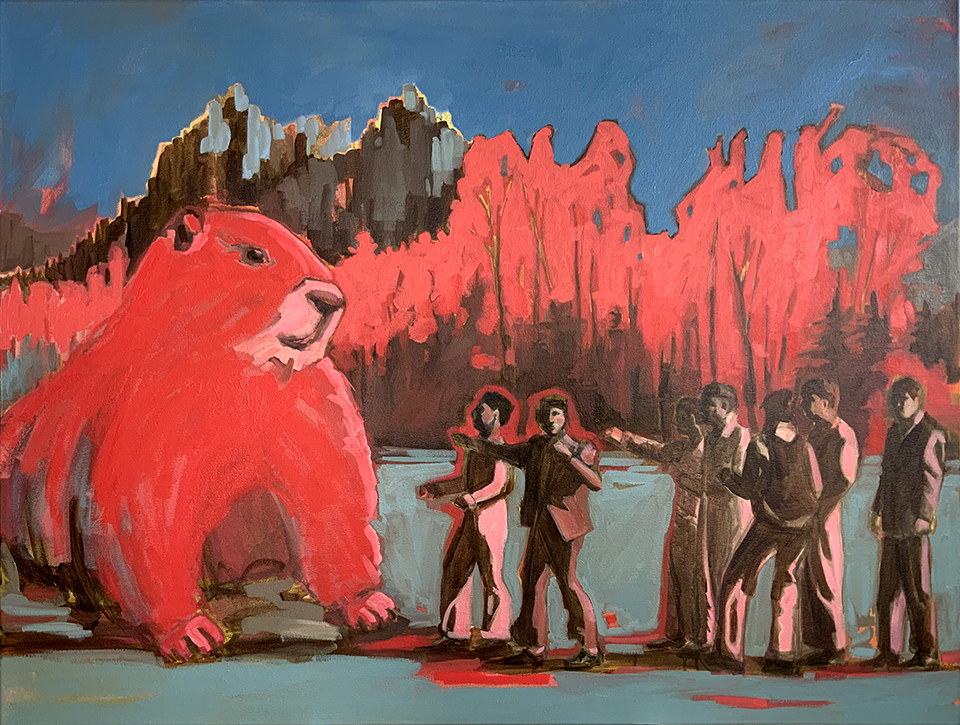
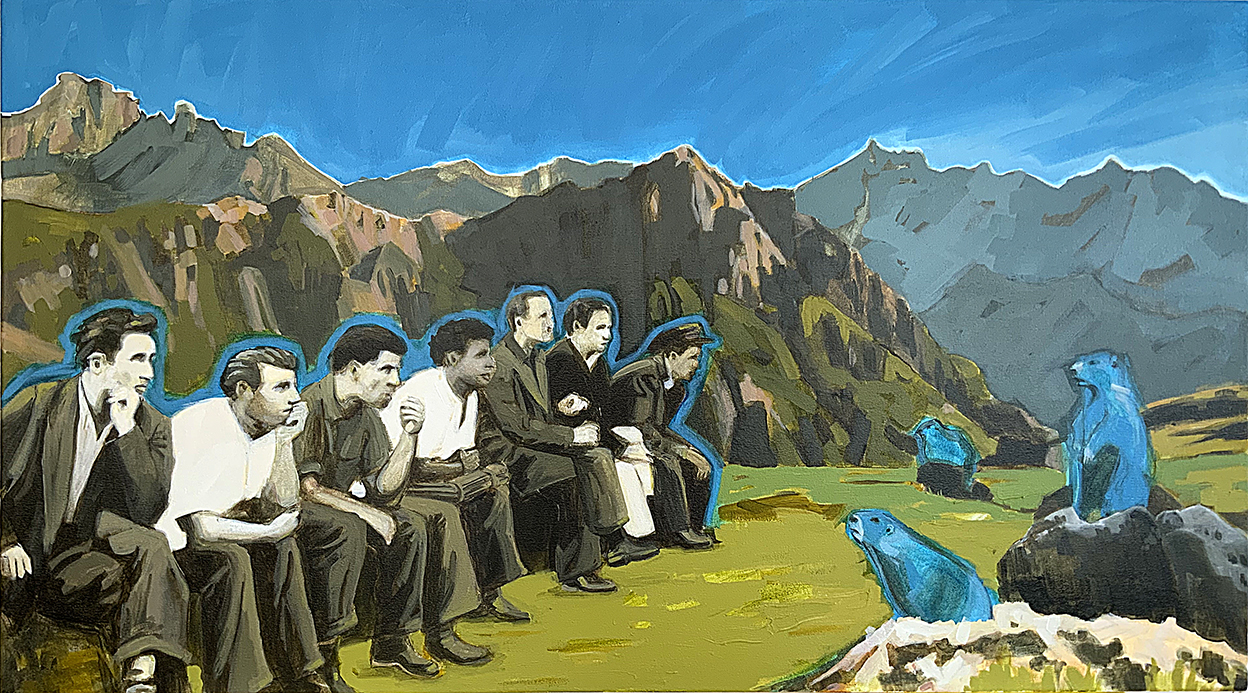
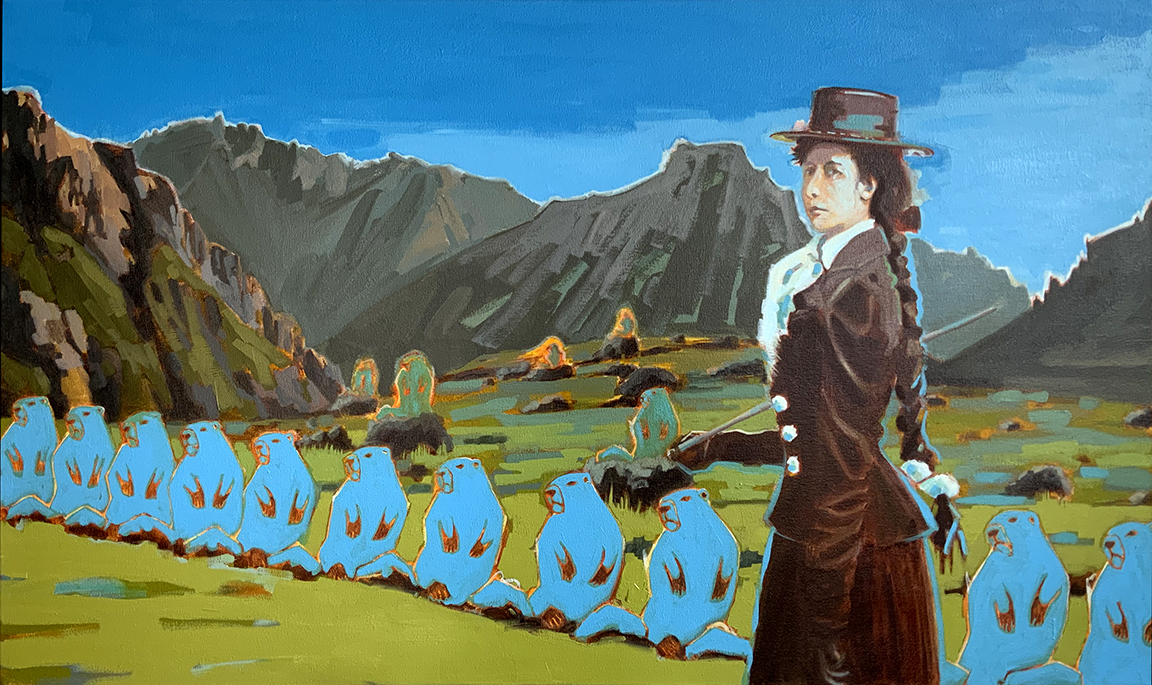

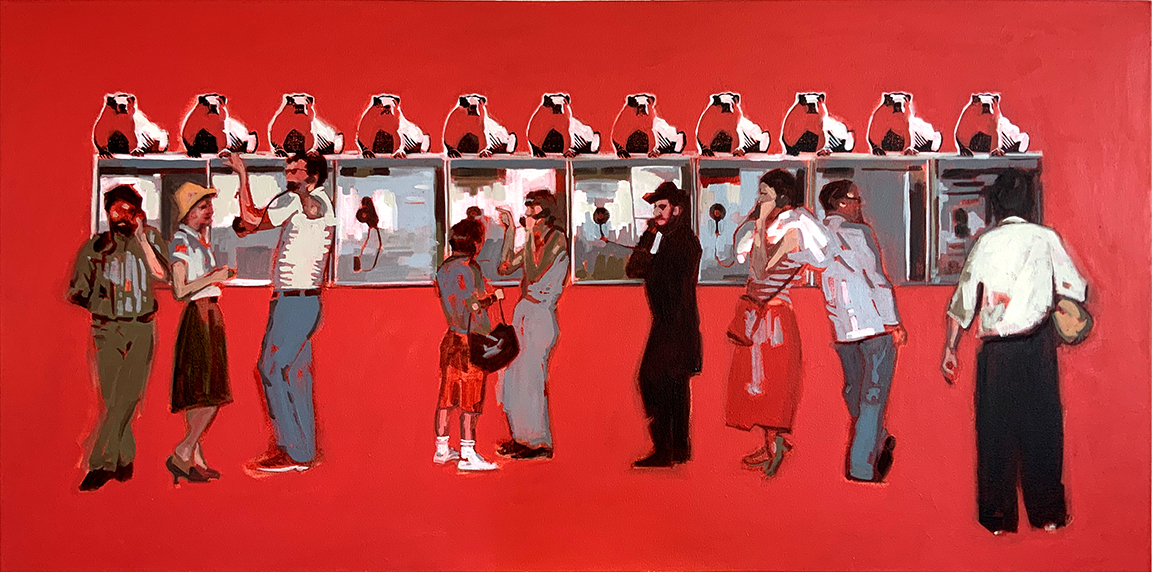
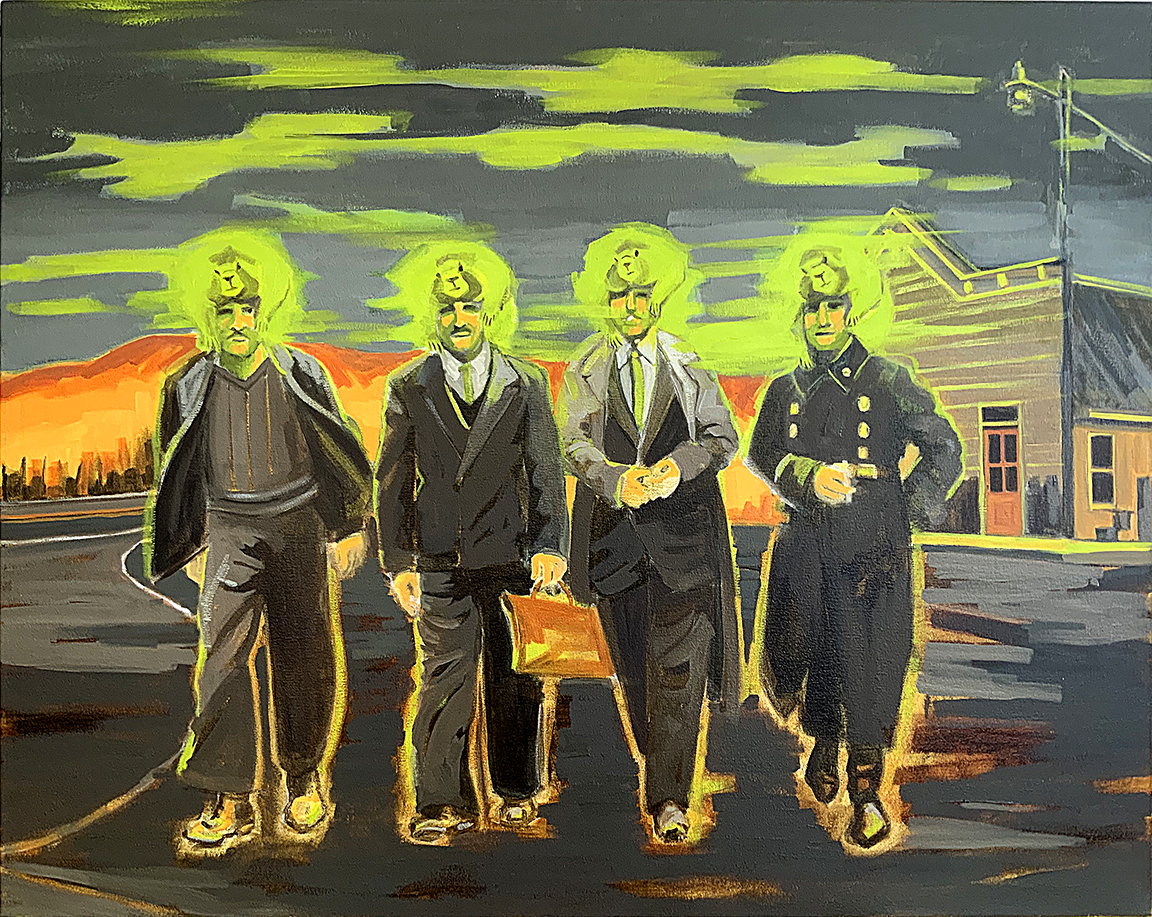

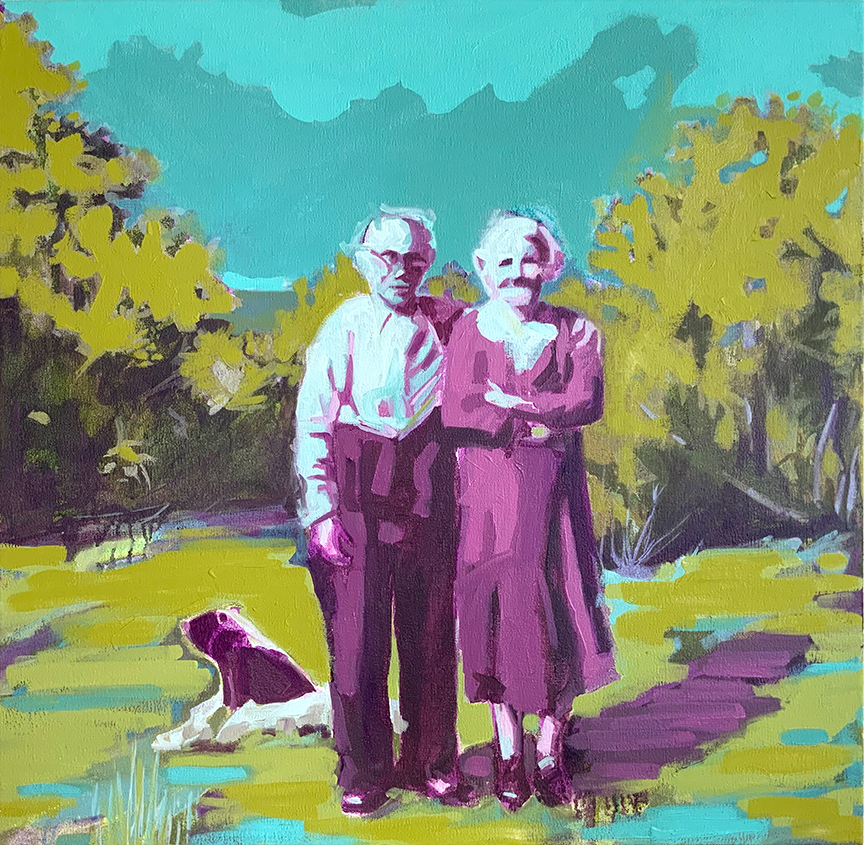
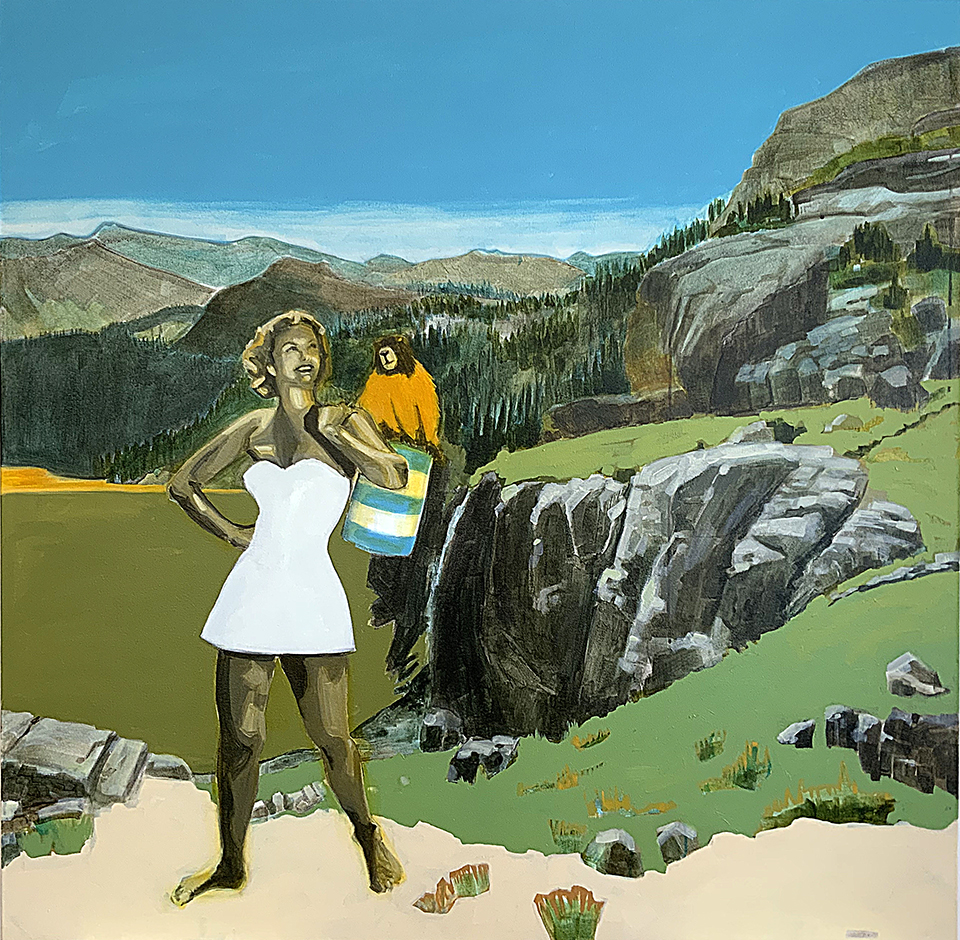
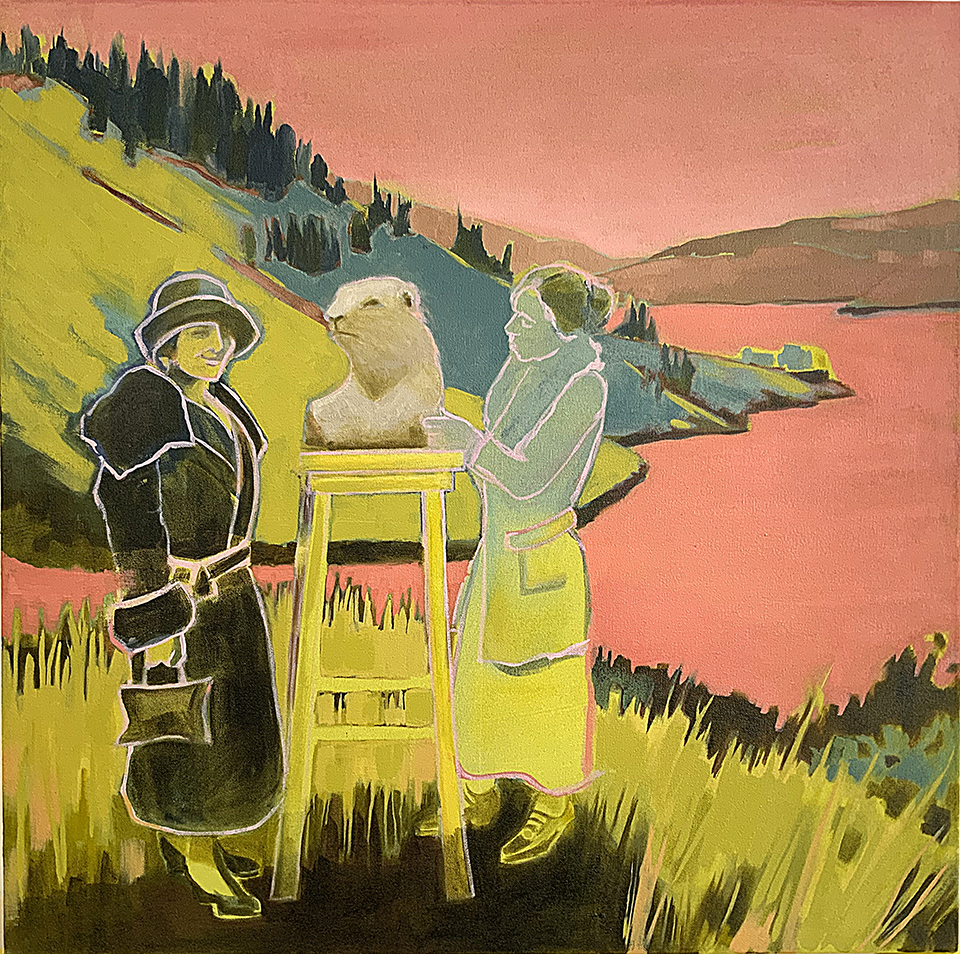

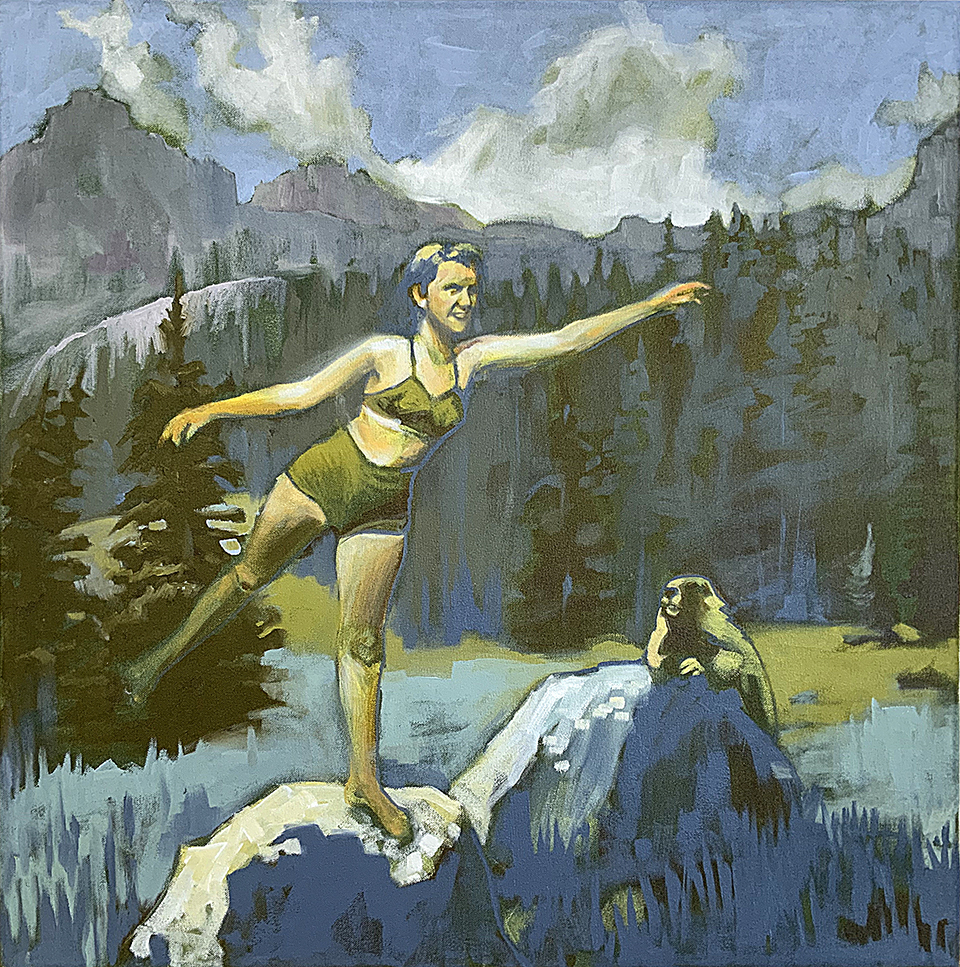
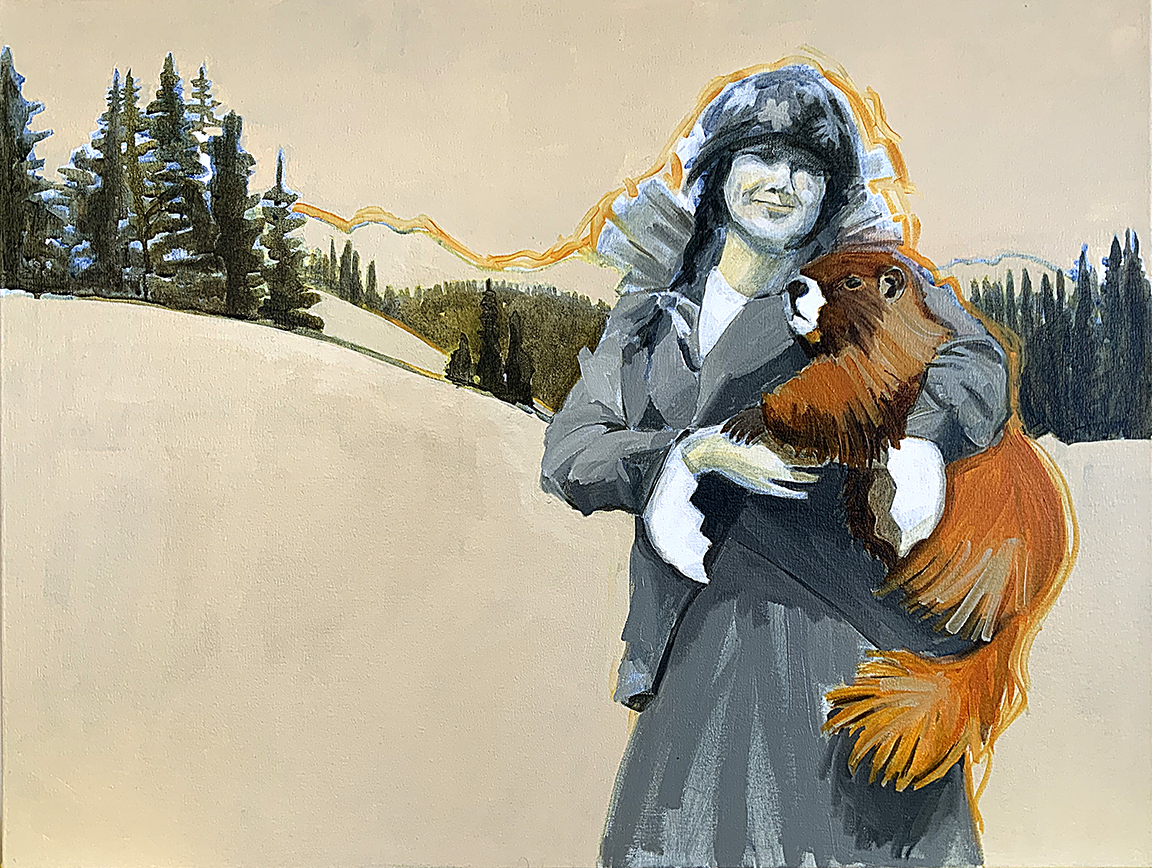
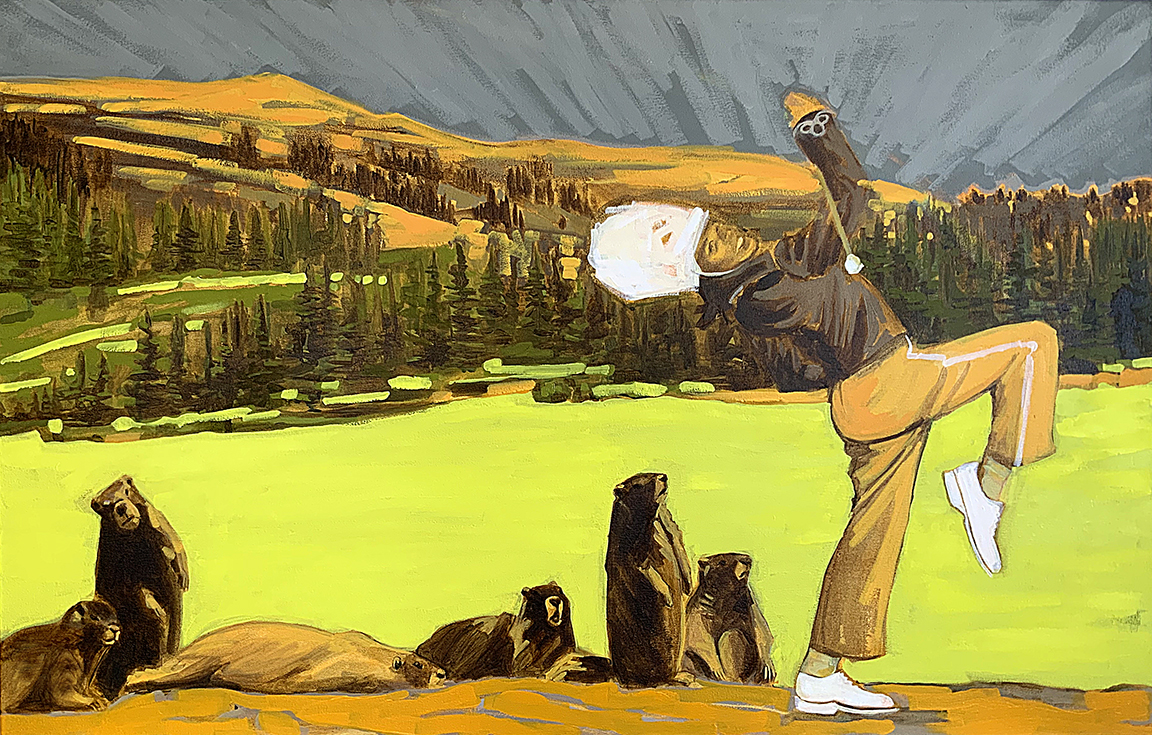
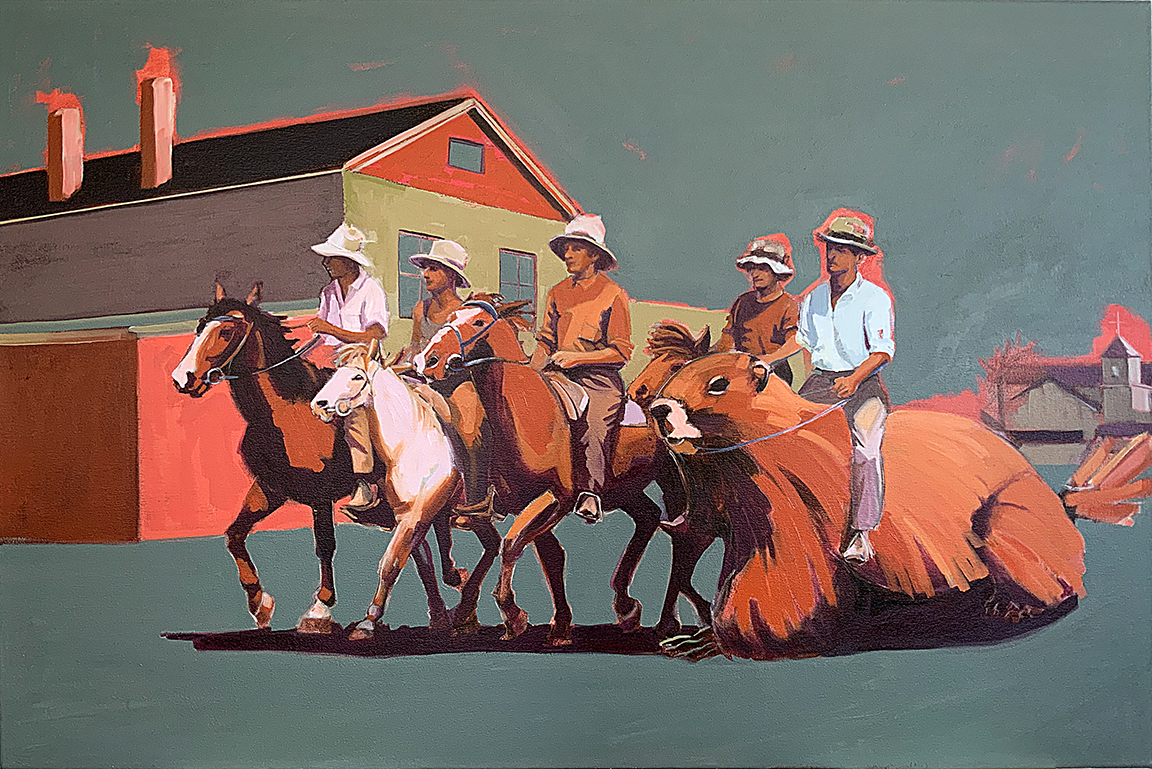
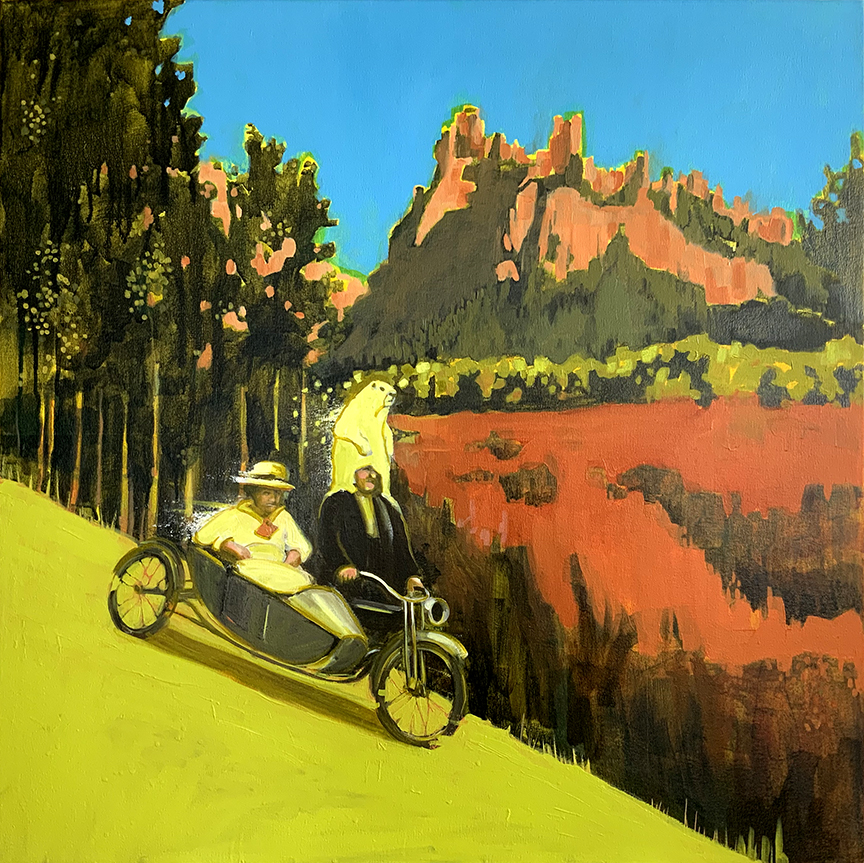
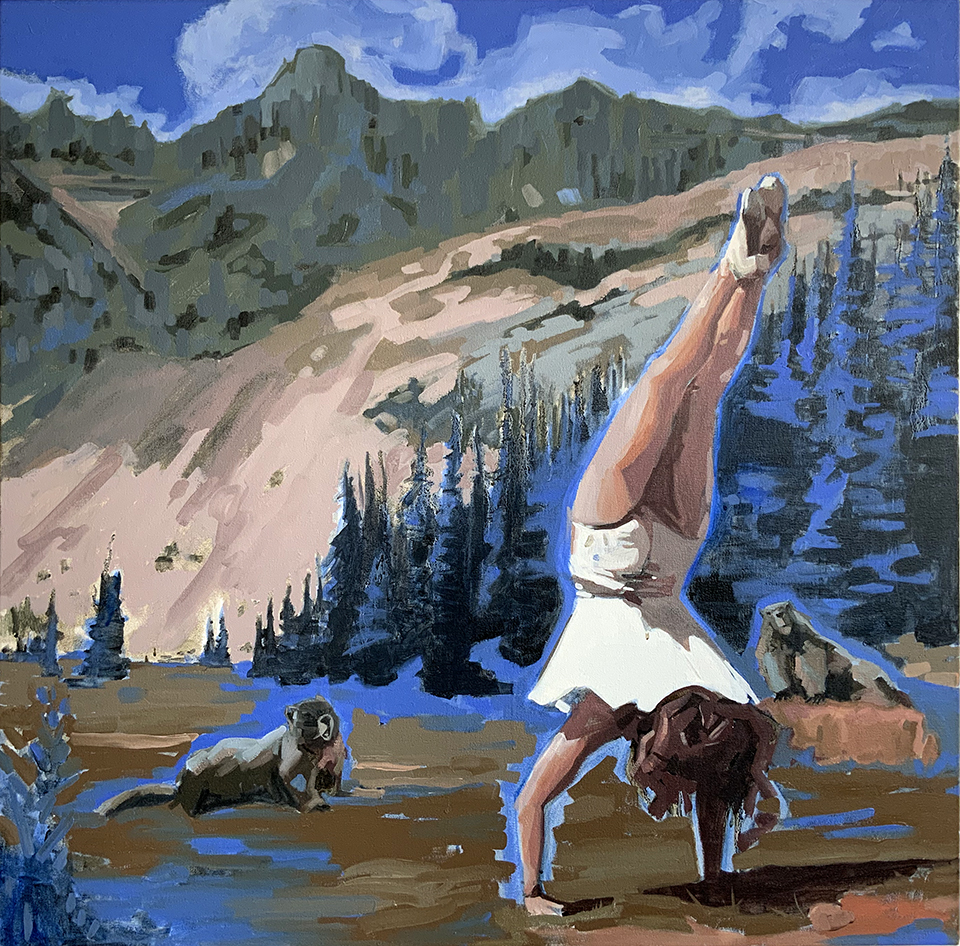

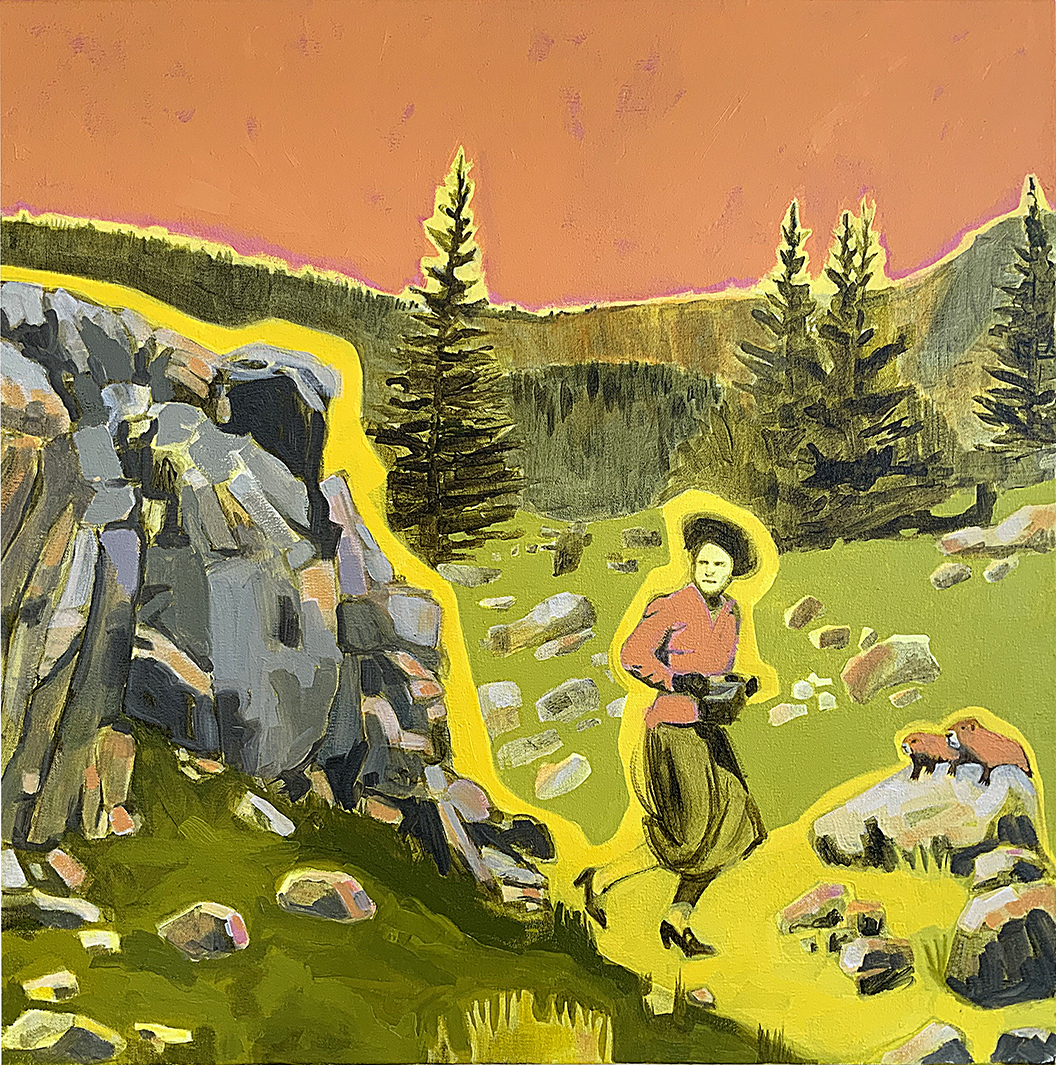

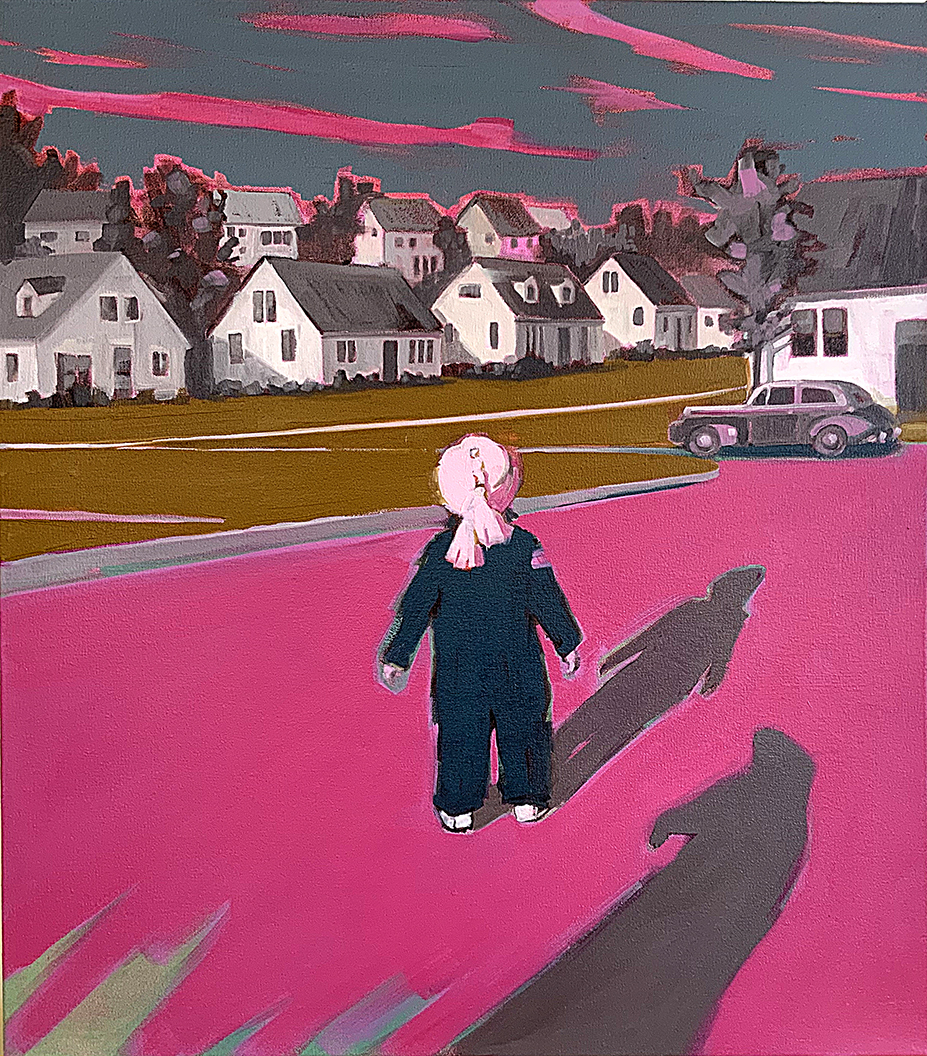
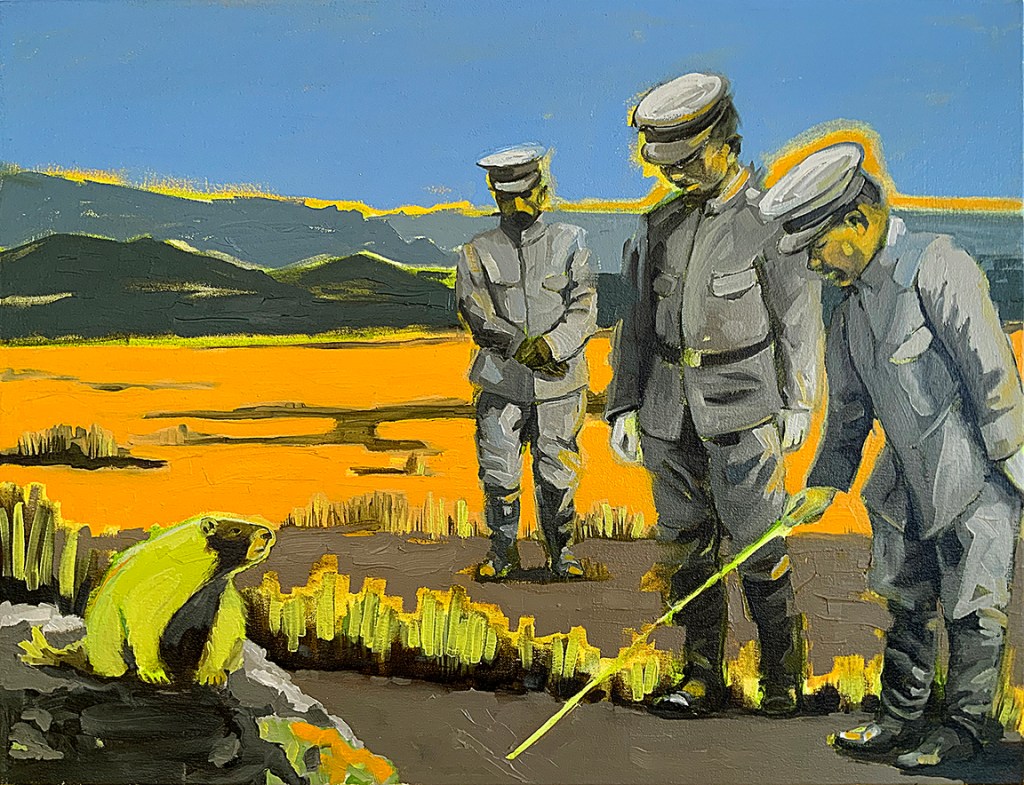
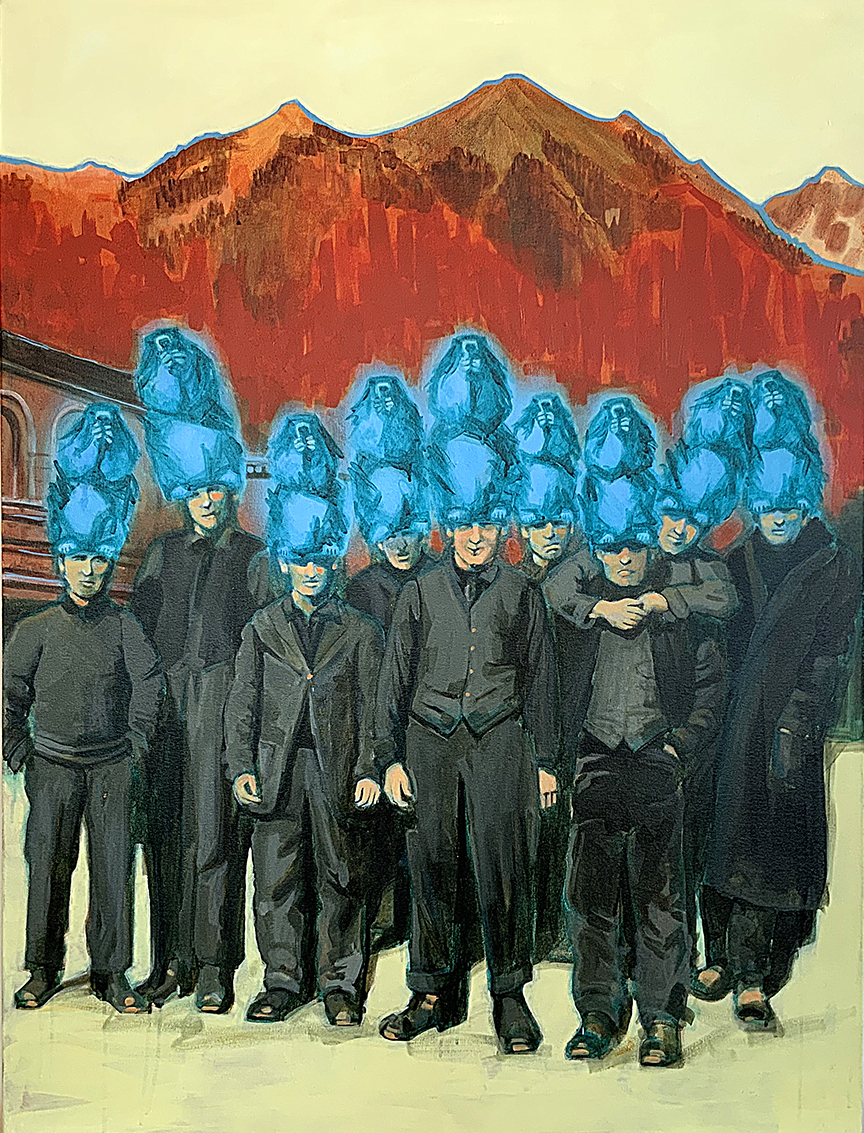
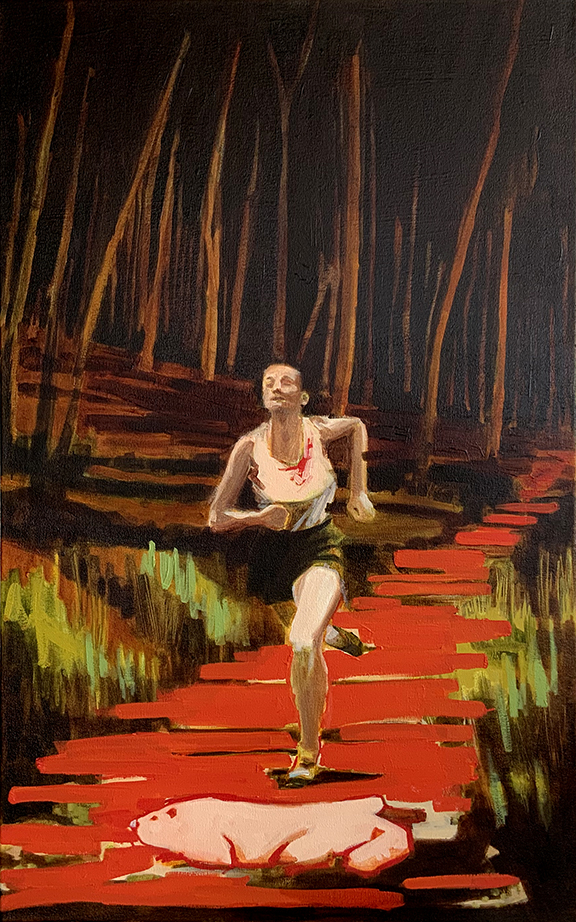
Artist’s Statement: The Tame Your Marmots series builds on the earlier series, Exposing the Sneaky Marmot, in which I explored various forms of self-deception in an individual’s behavior. In this new series, I further explore self-deception and add group deception, which is self-deception on steroids, amplified by the echo chambers we choose to inhabit.
Home
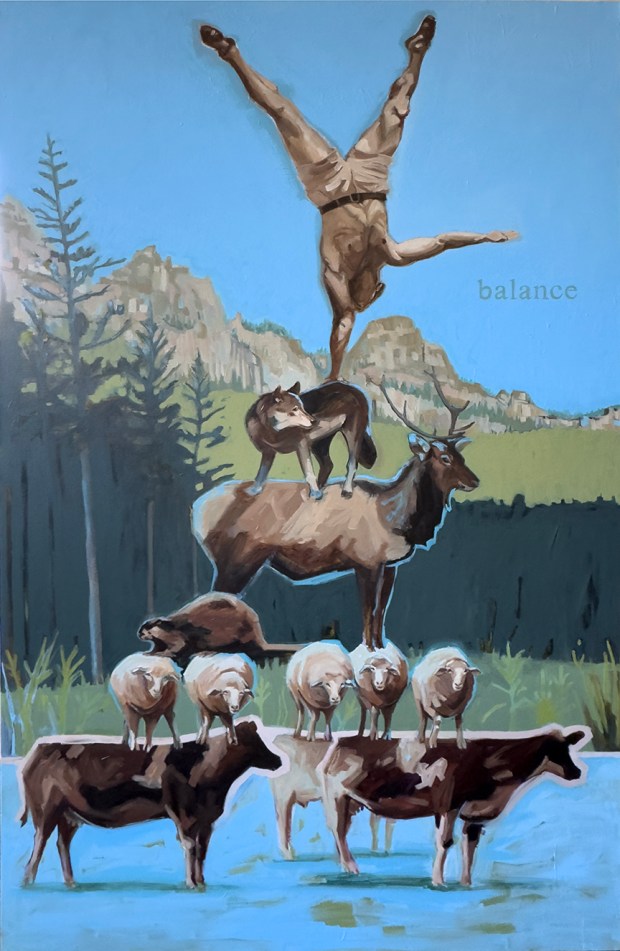
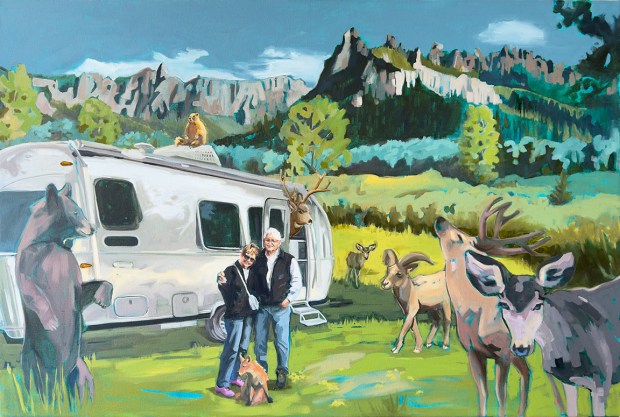
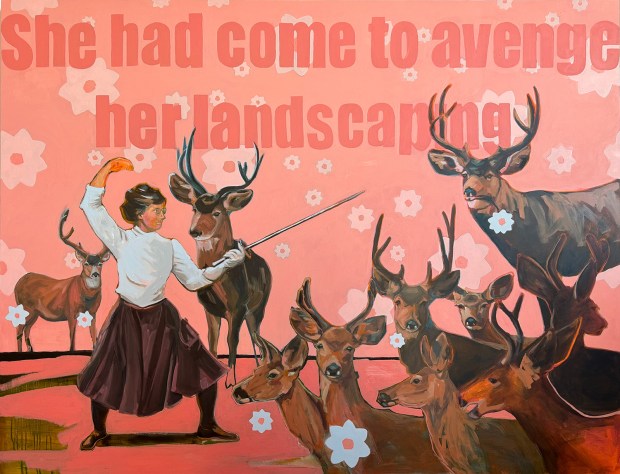
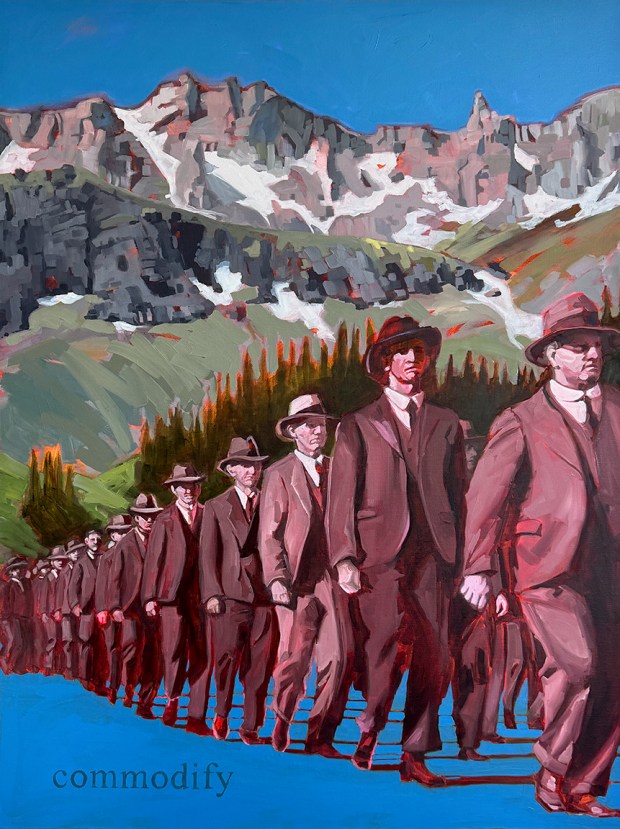
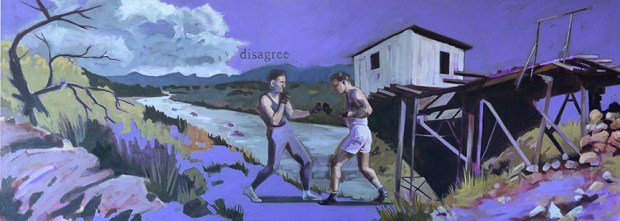
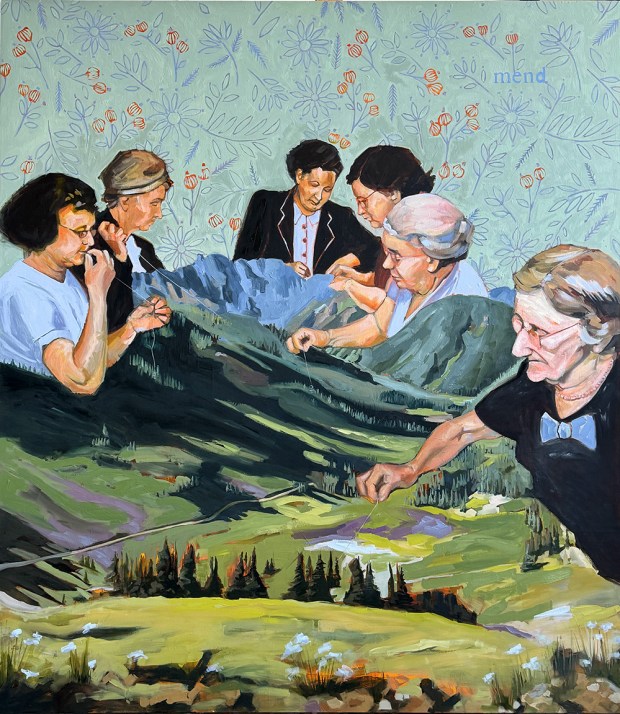
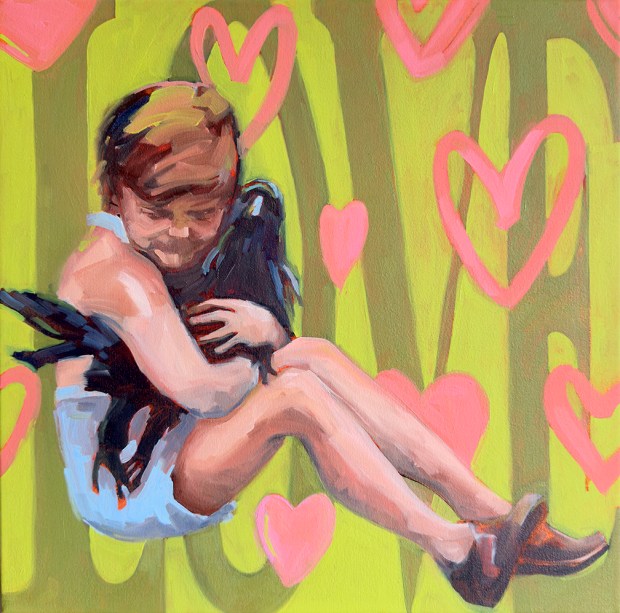
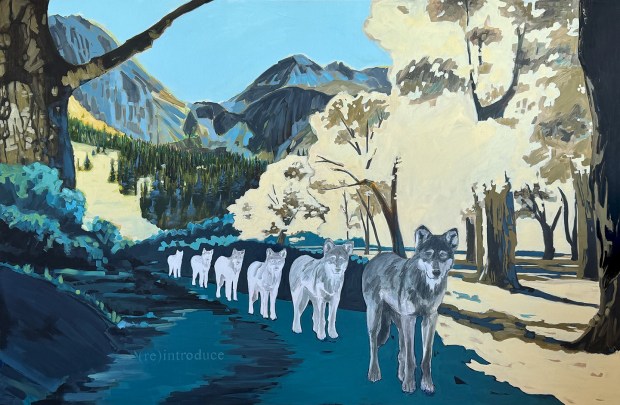
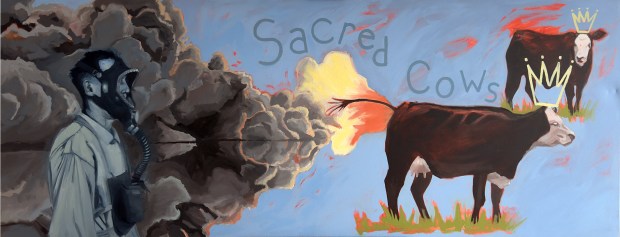
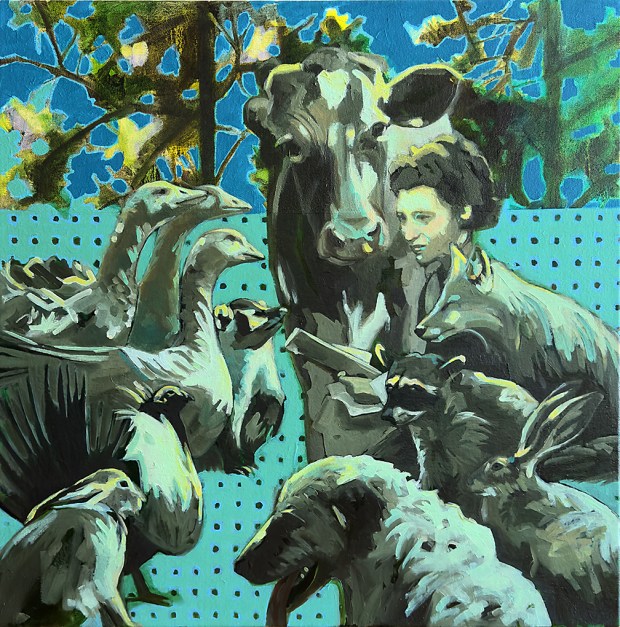
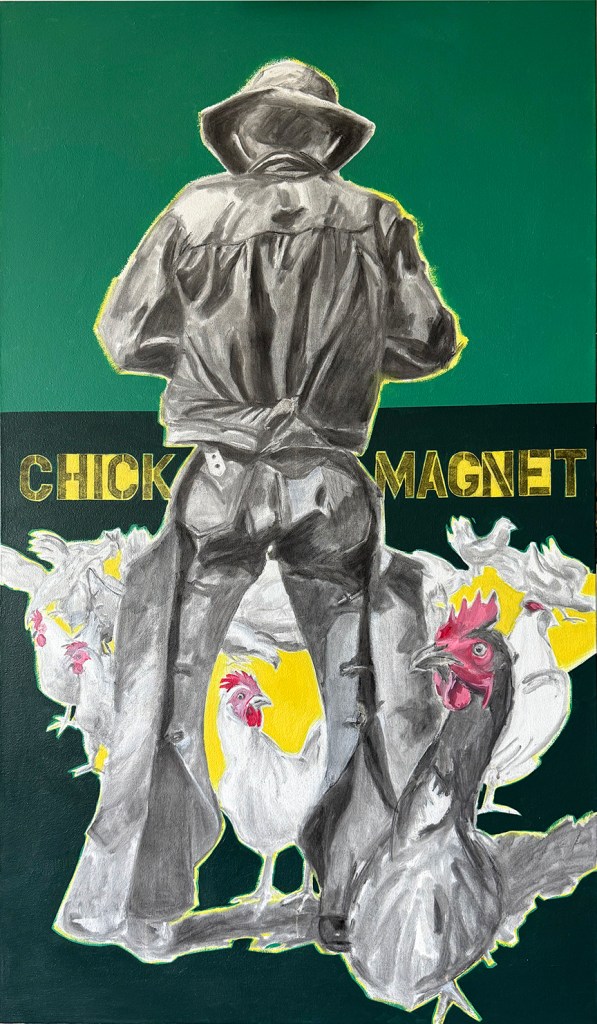
Artist’s Statement: This series, Home, is a work in progress. These paintings are musings about how we relate to the natural world, make decisions about the land, repair the damage we inflict, and find balance between domestic and wild. There’s pure love for the natural world here, but also an acknowledgment of the conflict over this precious planet’s bounty and how we treat its inhabitants. In the midst of the bickering, the question remains: Will we choose to annihilate or nurture?
Human/Nature
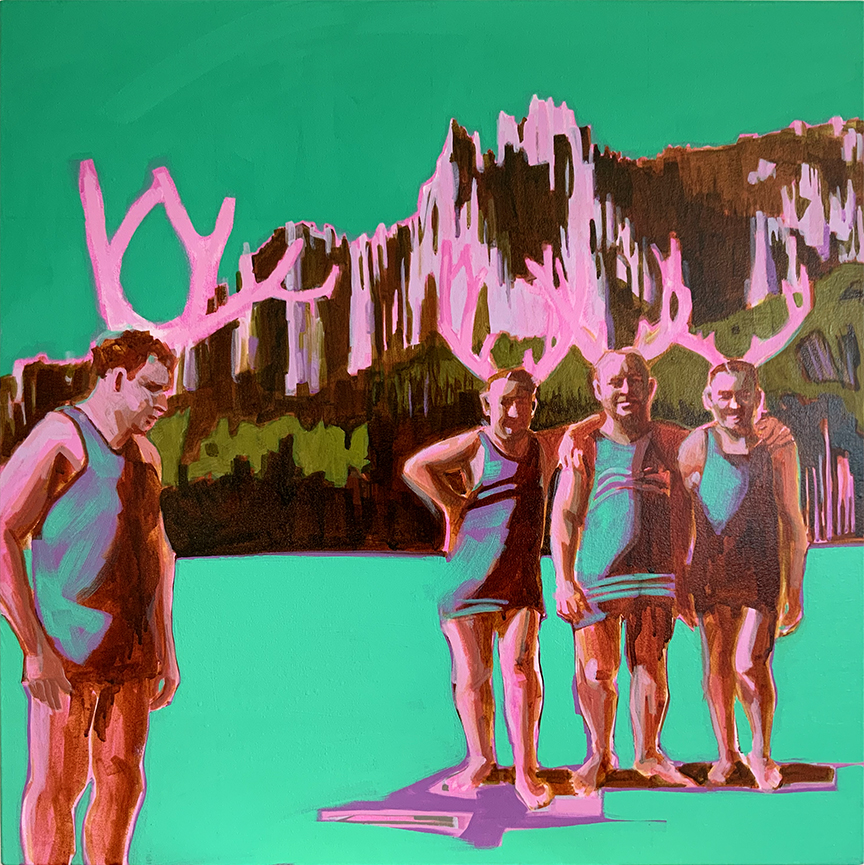
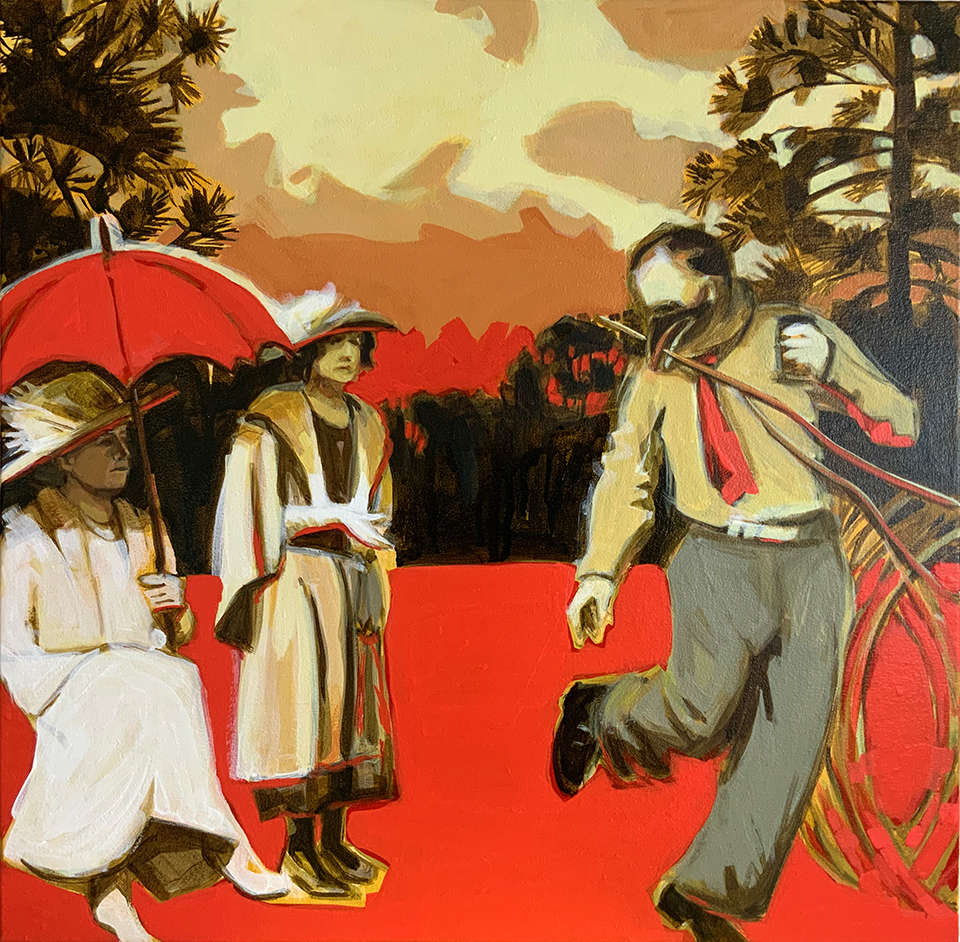
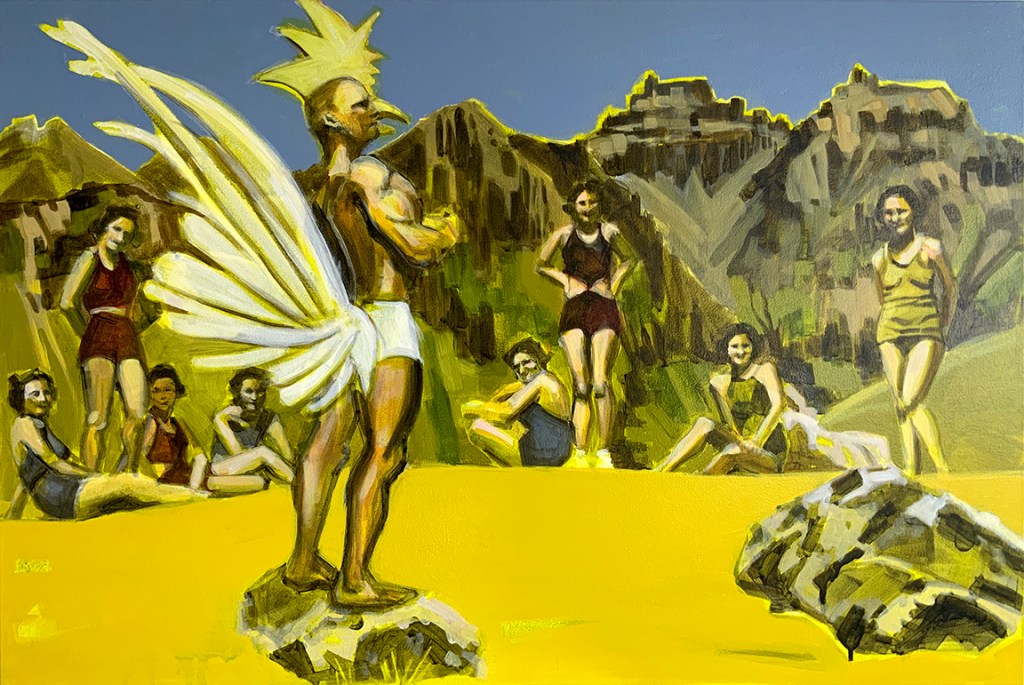
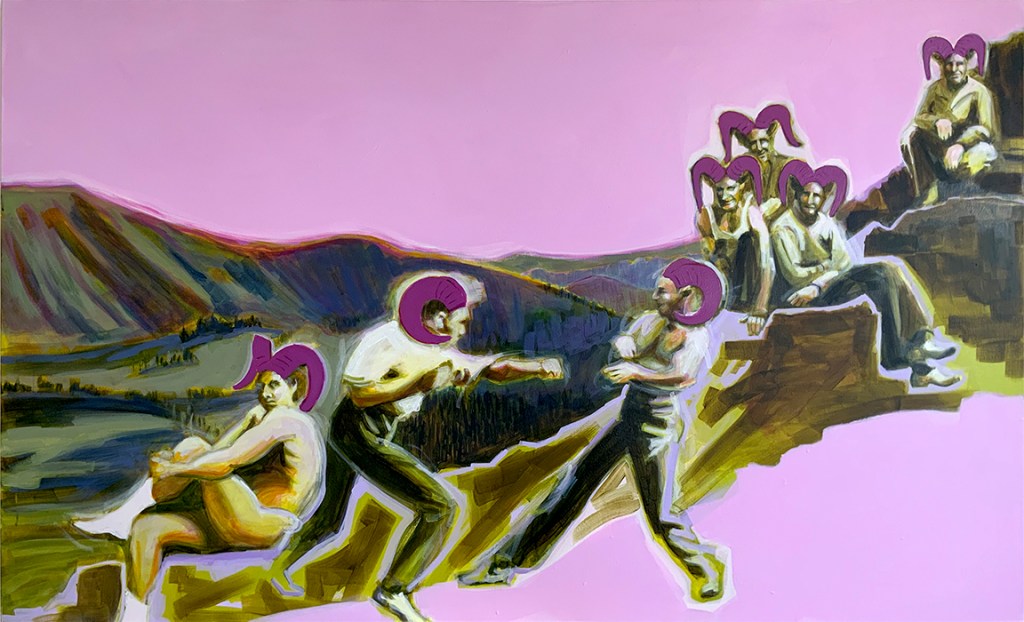
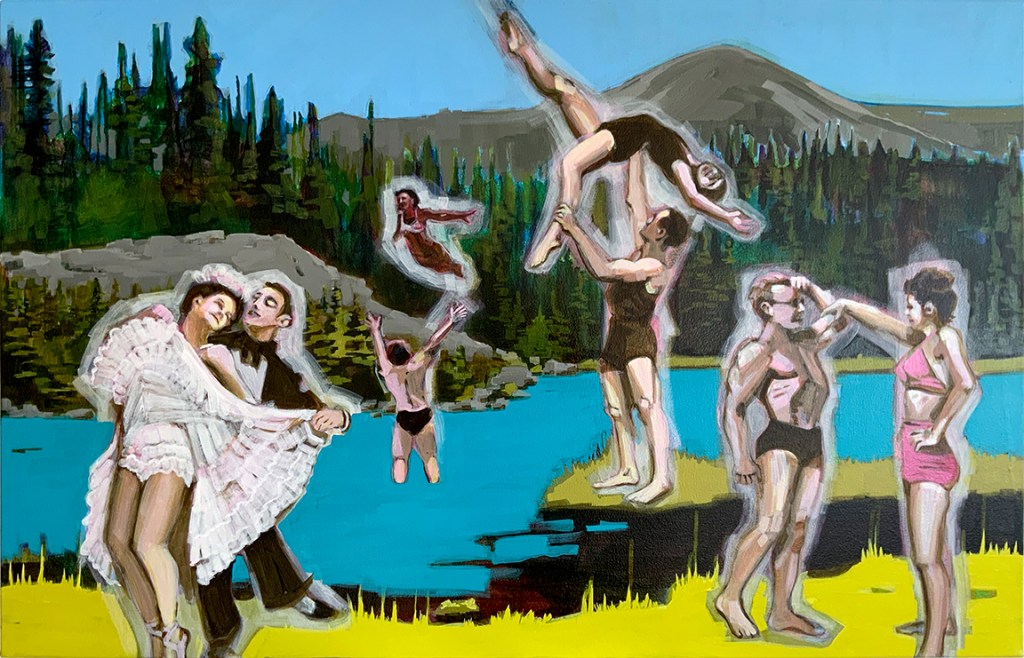
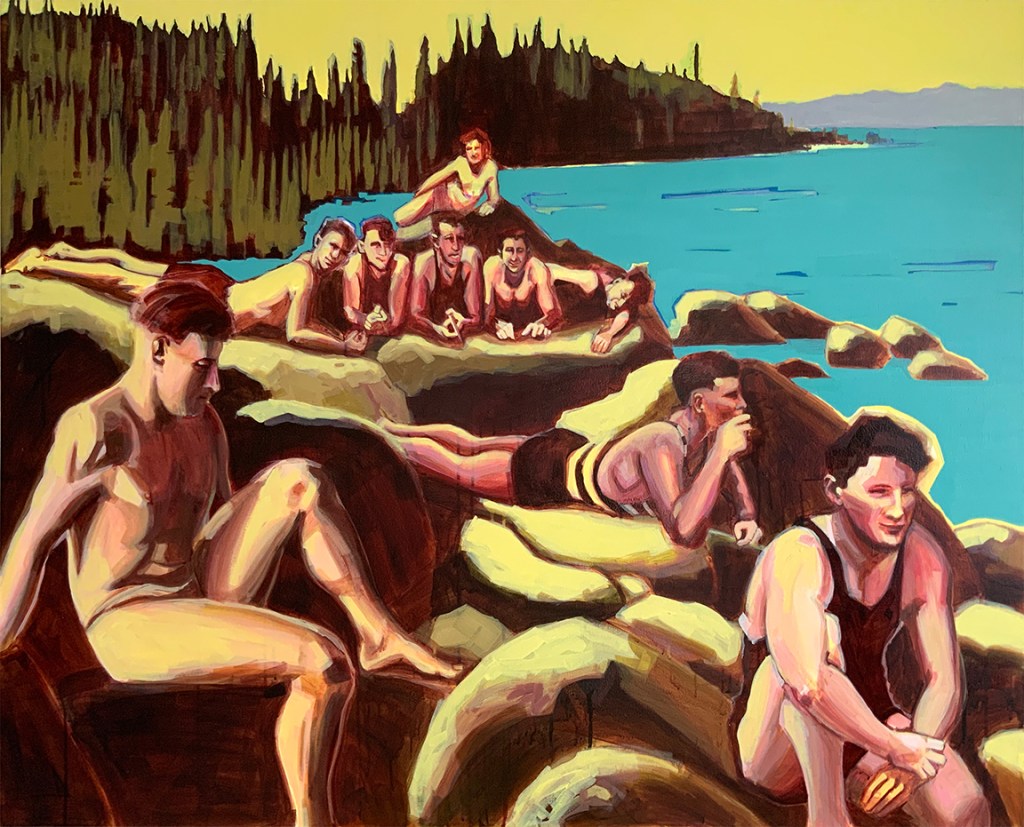
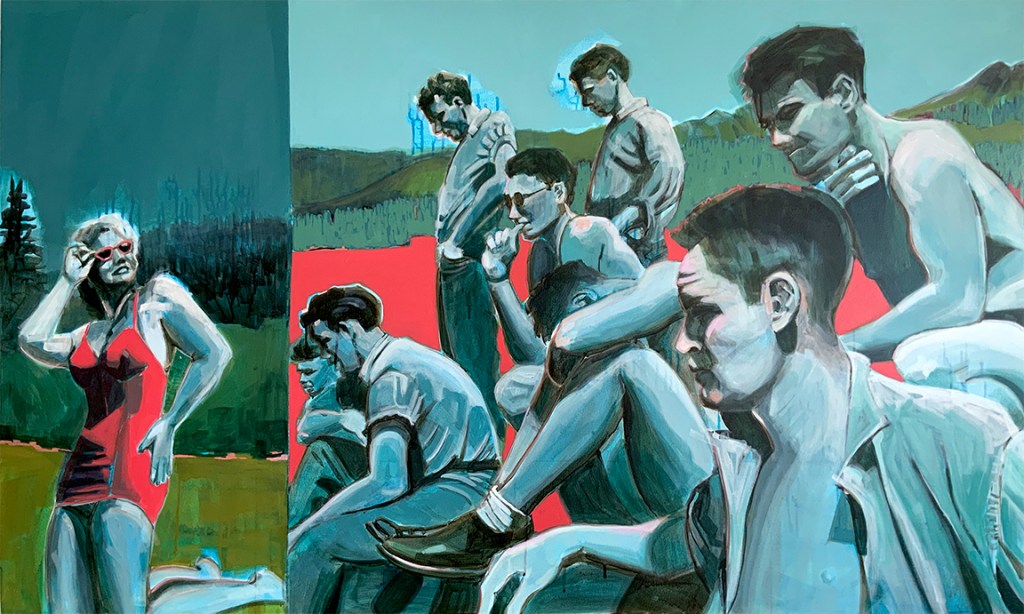


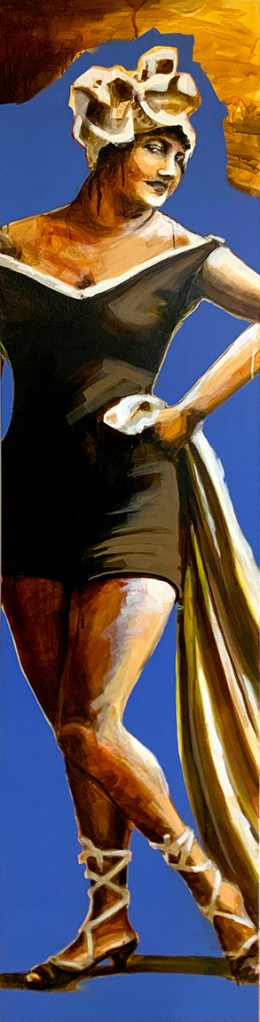
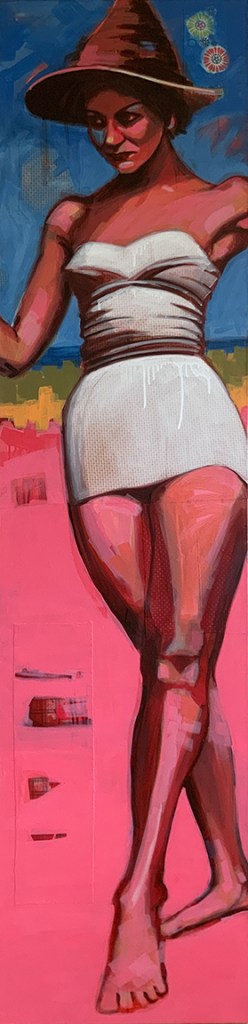
Artist’s Statement: The Human/Nature series began as a mashup of animal and human behaviors, an exploration of mate-seeking and the power of pheromones, visual cues, adornment, competition, attraction, and ritual. It was meant to be a romp into the clunky, awkward strangeness that occurs when humans and their animal kin hunt for a mate. However, as I delved deeper into the paintings and their meanings, I realized that what began as a playful exploration had become a complex, confusing, and emotional journey that I hadn’t expected. While this series is humorous on the surface, the topic of human sexuality is a complex and sometimes emotionally loaded subject. Yes, humans are mammals, and we behave in ways that mimic our wild kin; however, human sexuality is far more complex and evolves as our lives change and we age. In addition, the “Me Too” movement revealed how many of us have been victimized by sexual violence. I am struck by the fact that humans are supposed to possess a higher level of consciousness than our animal kin, but we sometimes fail to behave that way.
In this series, there are very large, sensual women; I gave them complete control over their own bodies and sexuality by making their canvases much larger than the others. Their titles give them absolute authority to select with whom they share themselves.
The smaller canvases feature a mixture of activities and human/animal traits, including intrasexual selection, in which males compete with one another and put on elaborate displays for females, and intersexual selection, in which females choose their mates. There are also canvases representing those who have passed the stage of attracting and selecting a mate and are now focused on other things instead, like migrating to warmer climates or chilling with their former rivals.
We Want Our View and Eat It Too
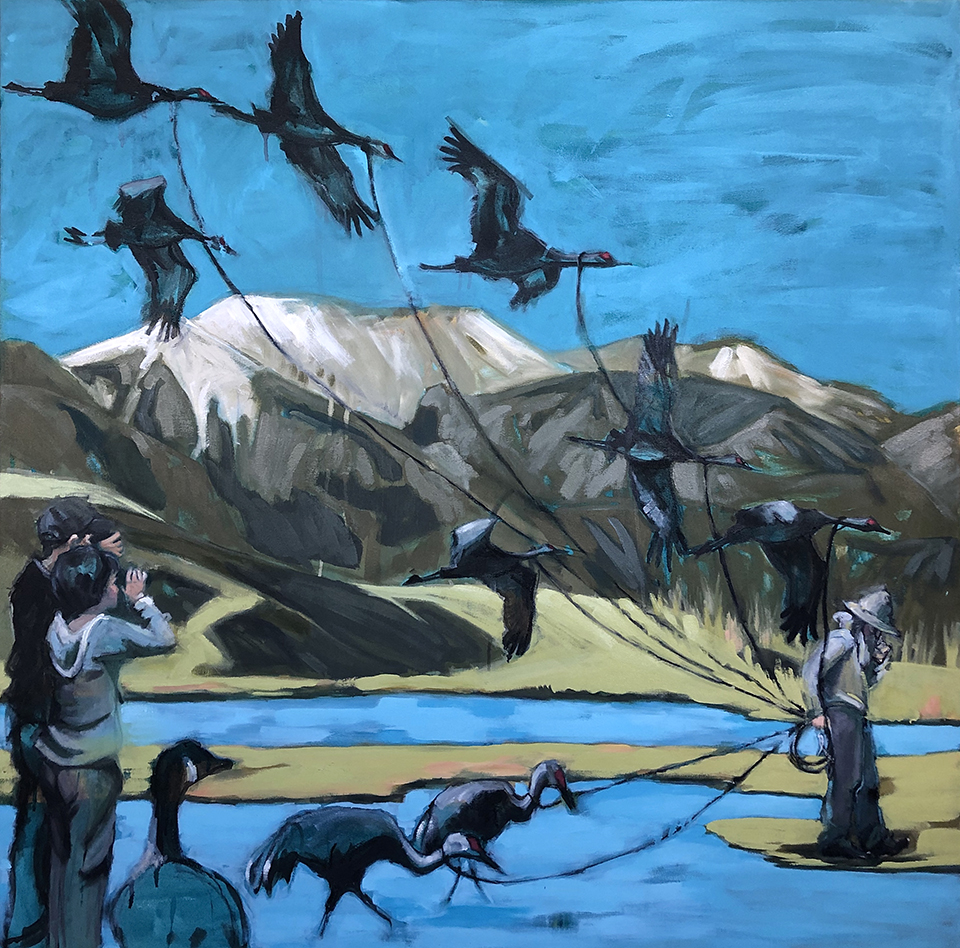
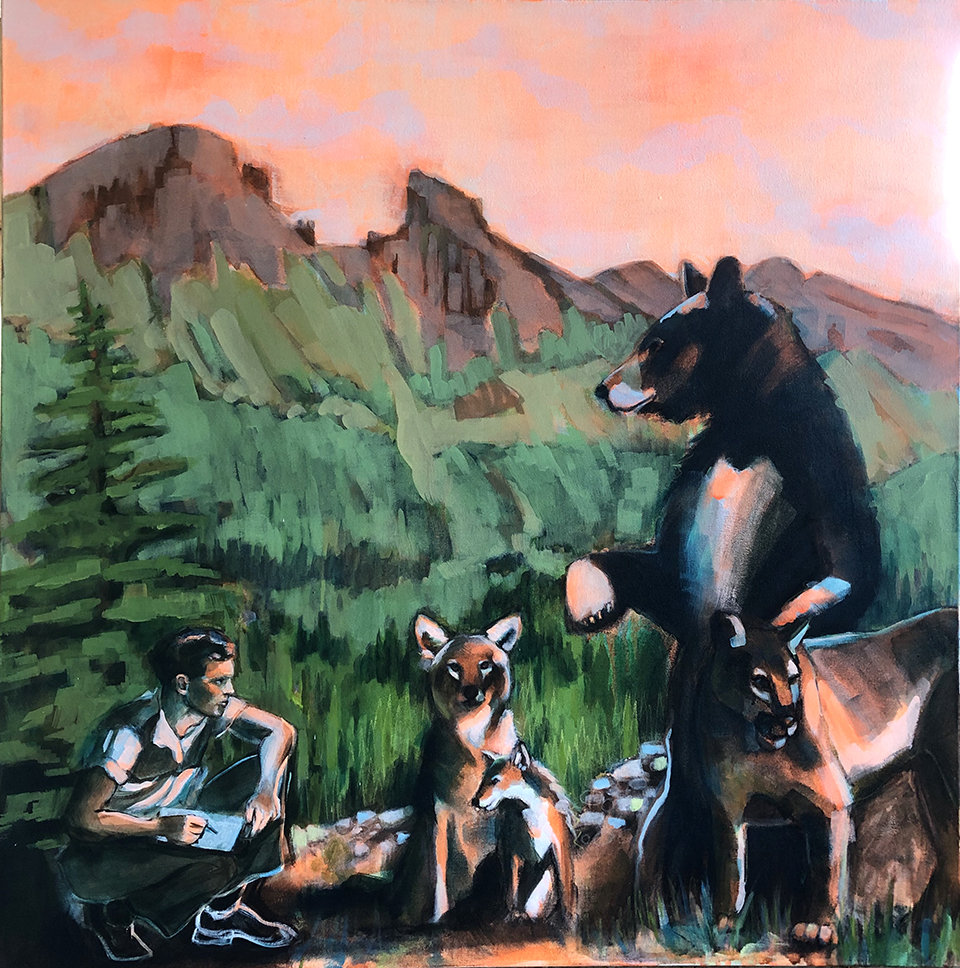

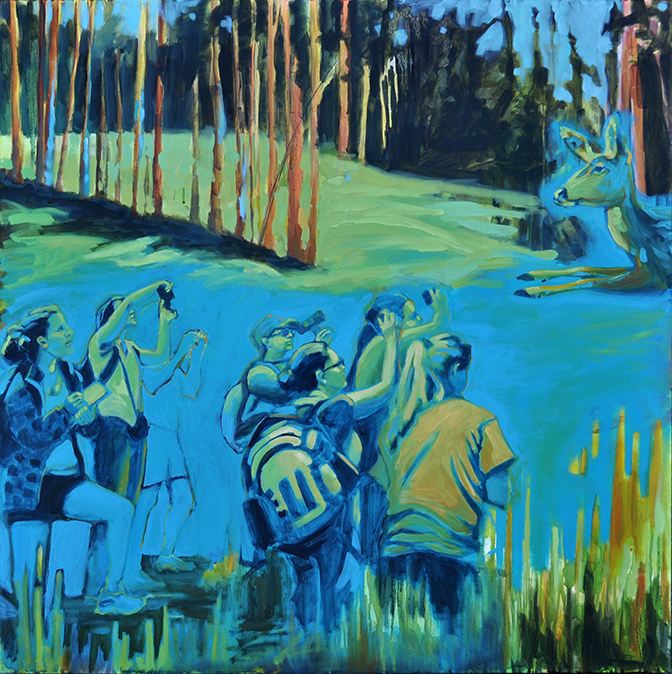
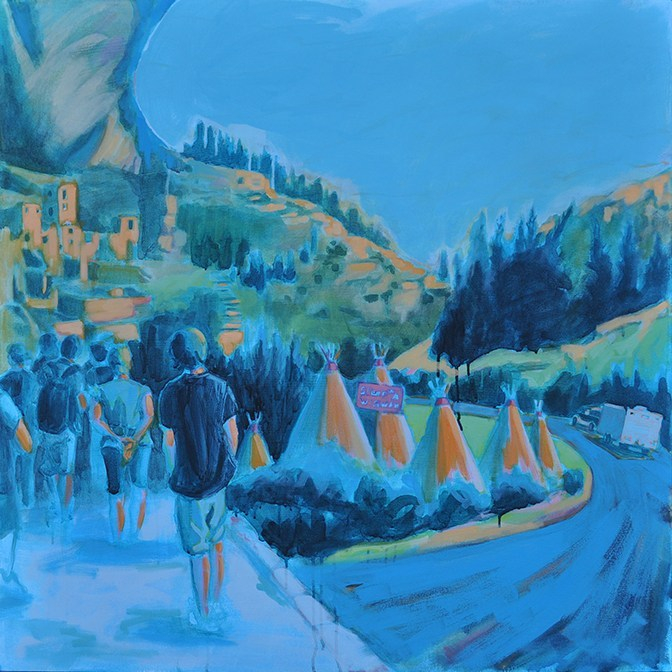
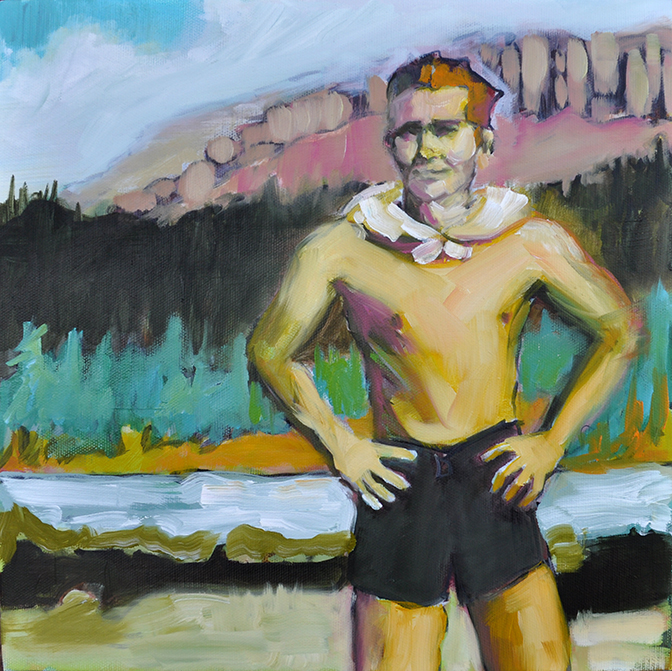
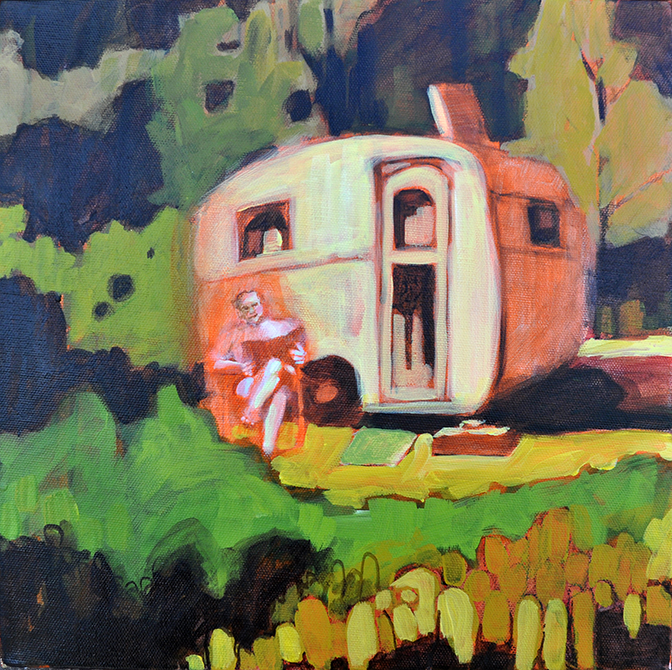

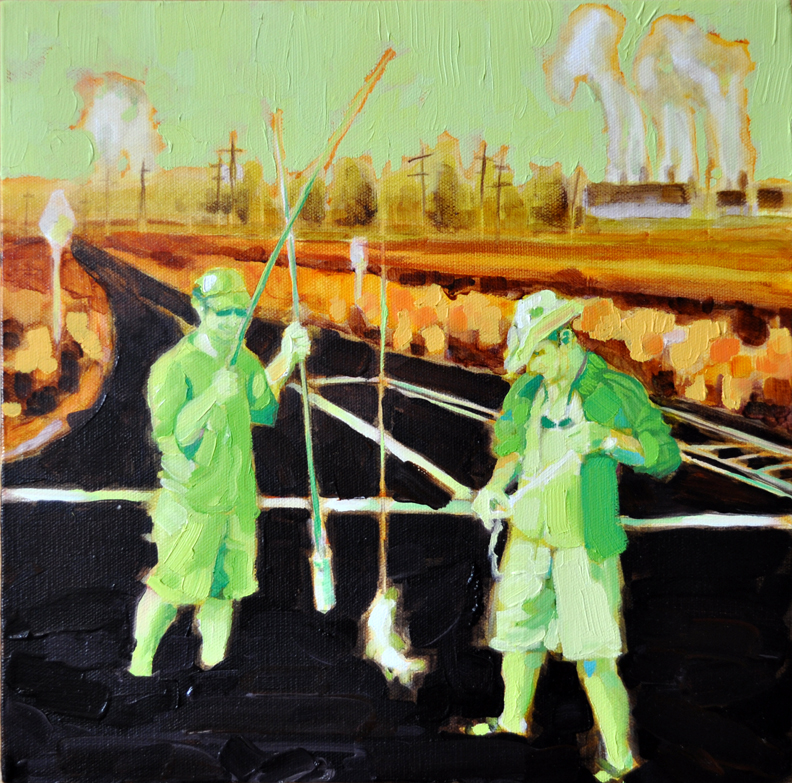
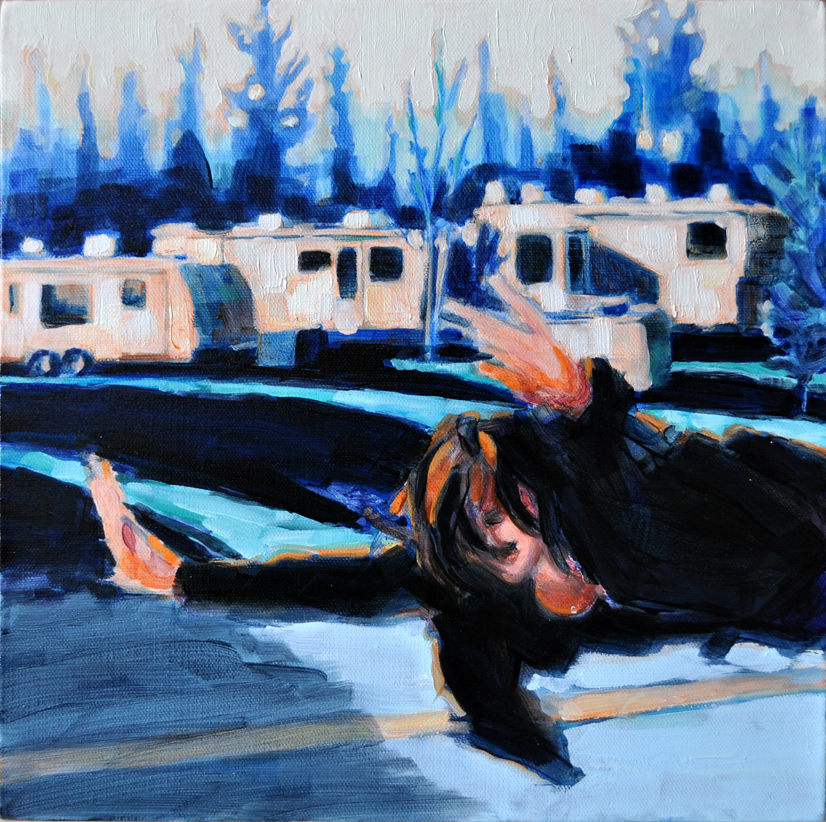
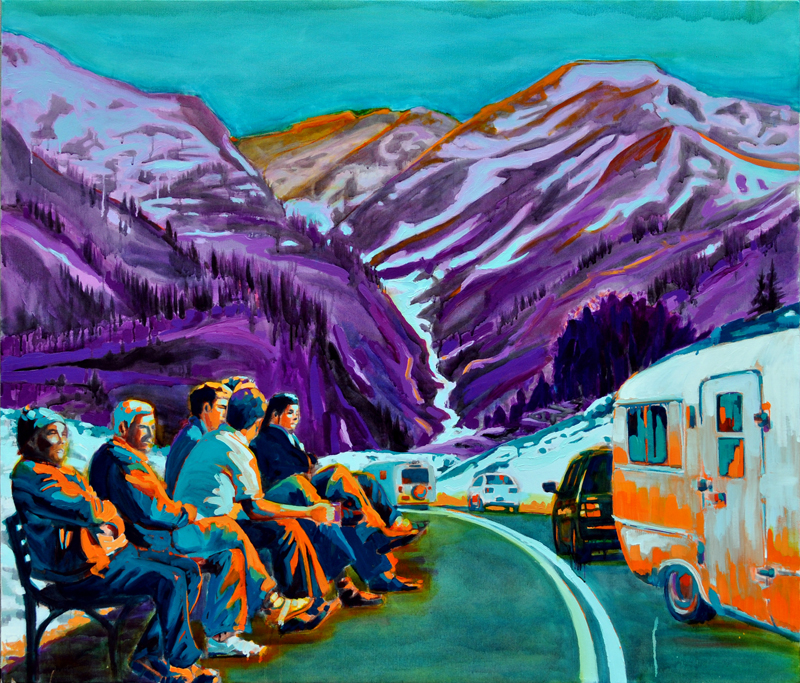
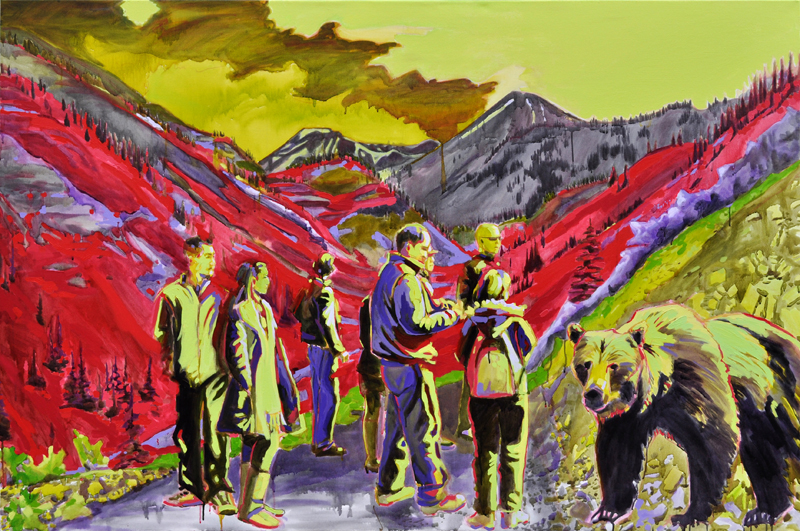
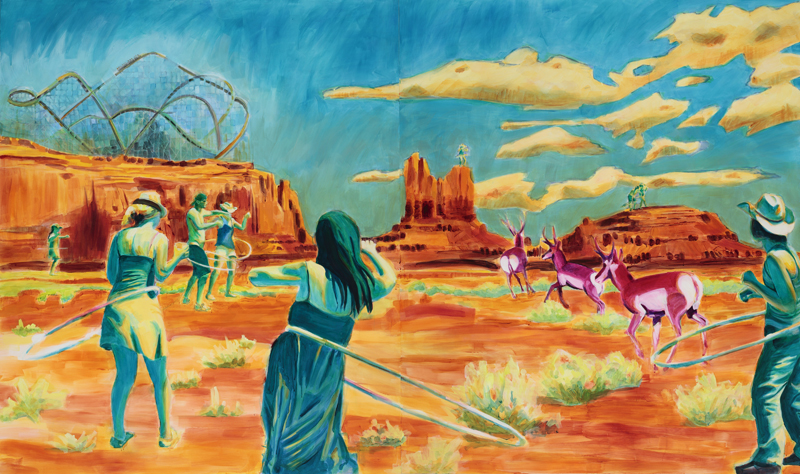
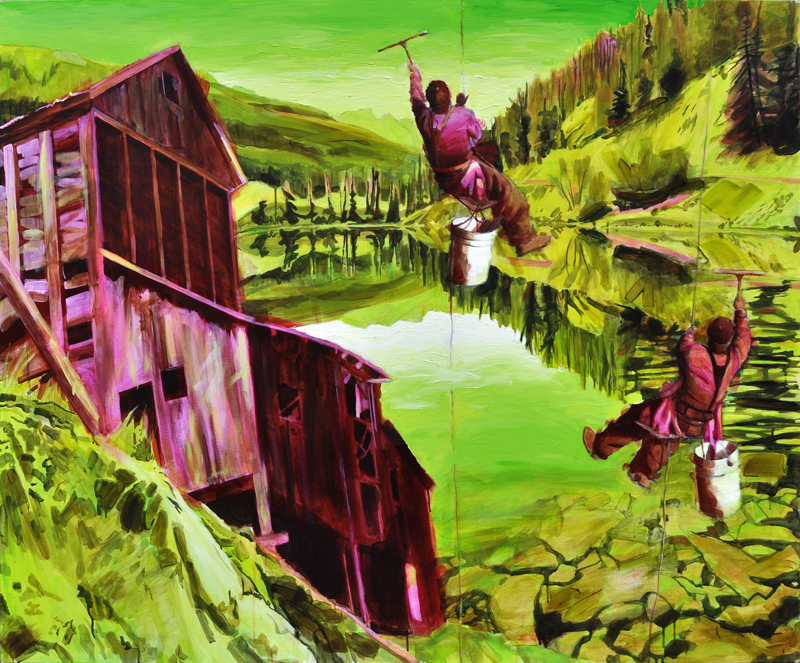
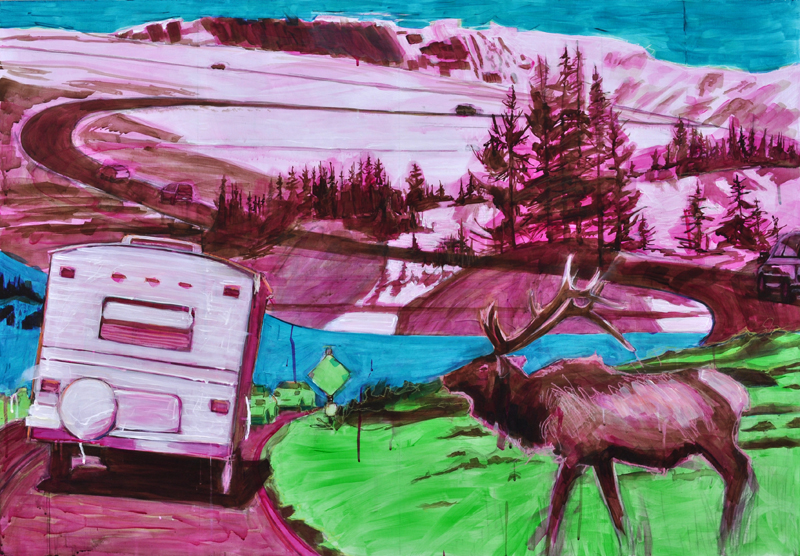
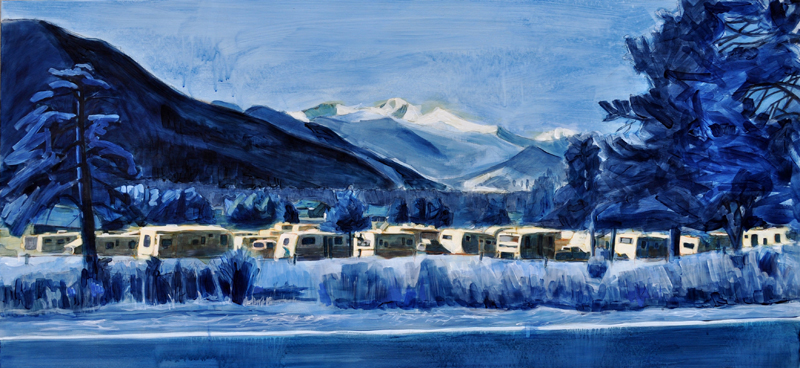
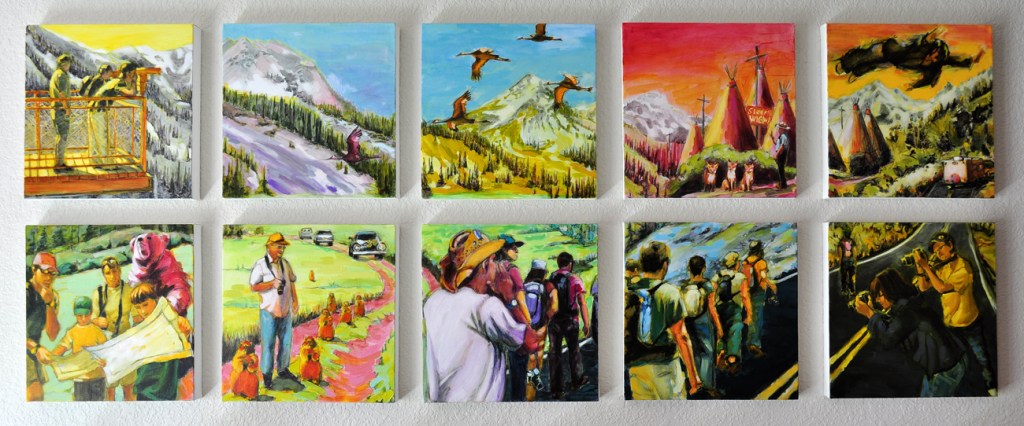
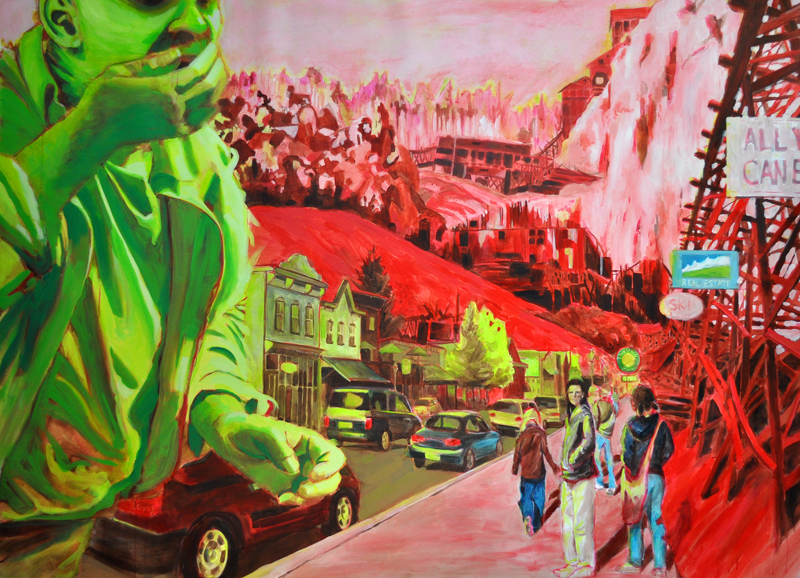
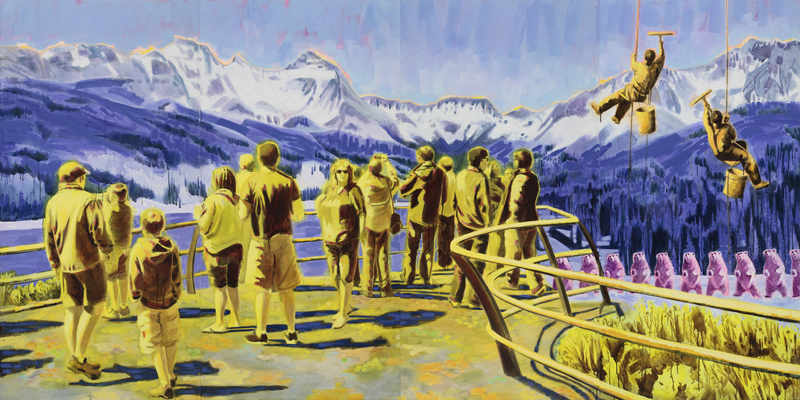
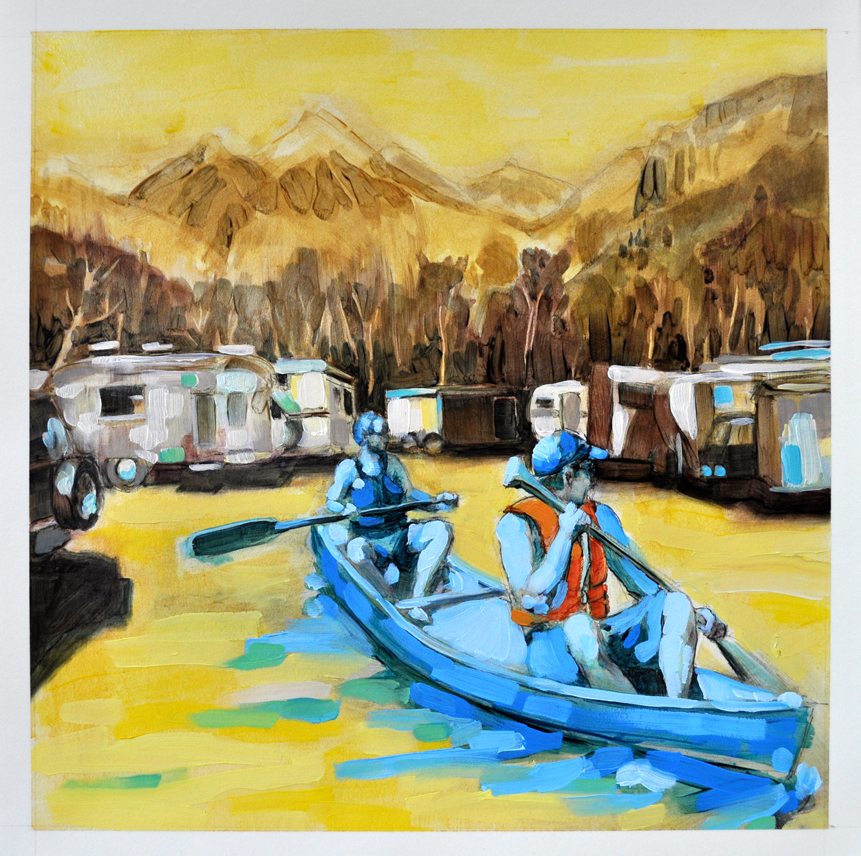
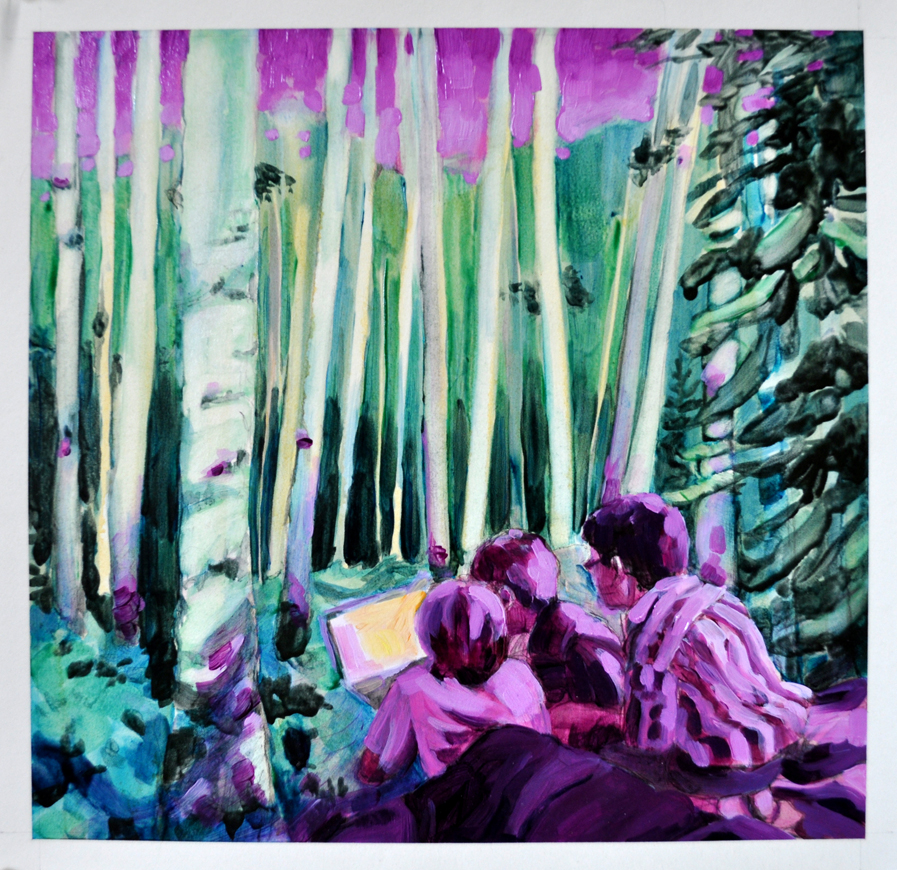

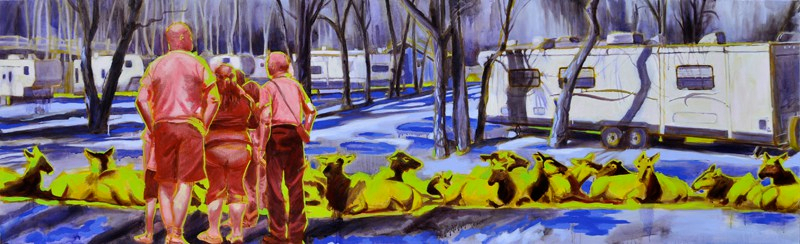

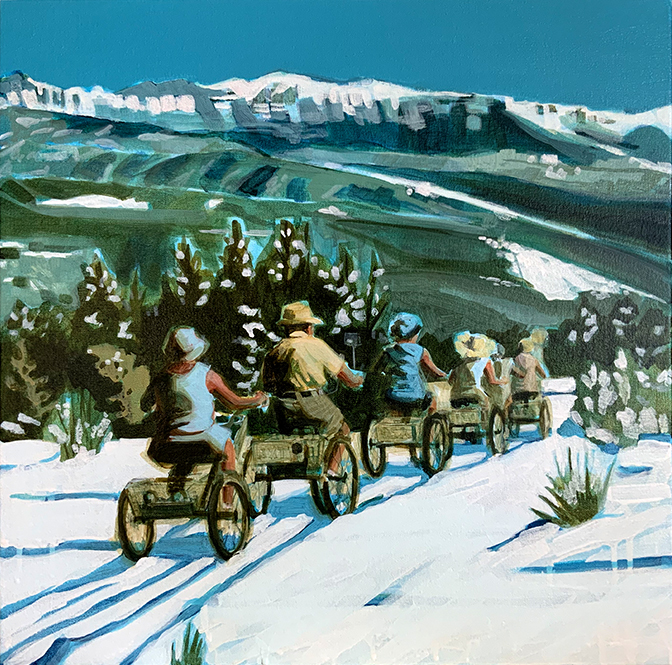
Artist’s statement: The series “We Want Our View and Eat It Too” explores how we, as tourists, interact with the natural world, especially when visiting National Parks and other beautiful places. These paintings examine our relationship with the natural landscape, its wild creatures, and preserved historical sites, while questioning our notions of fair use and conservation.
Domesticates
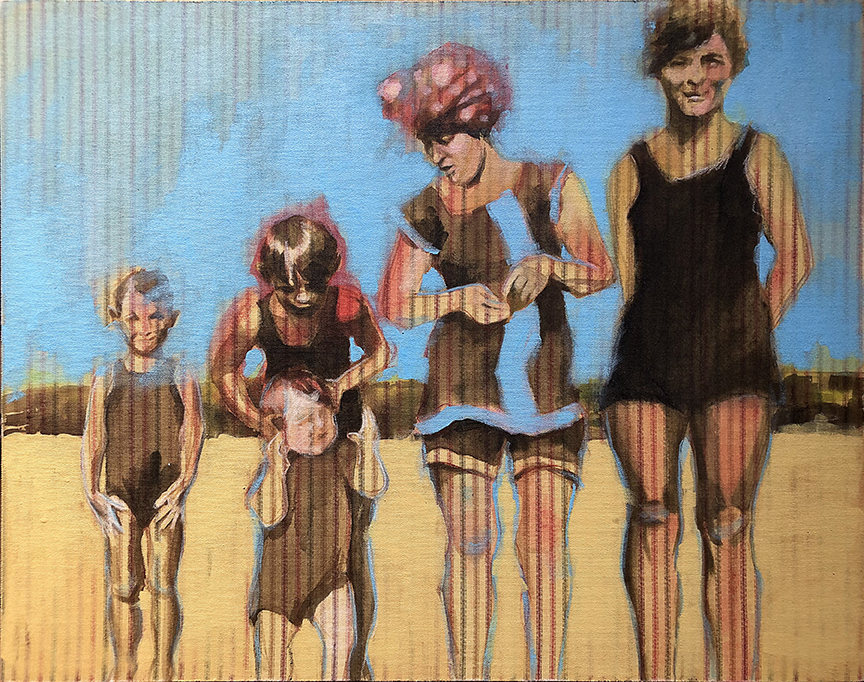
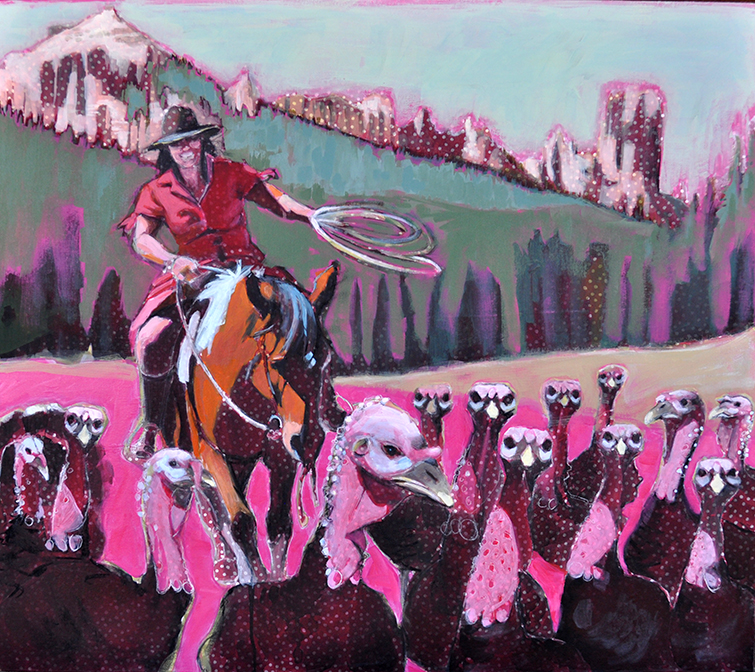
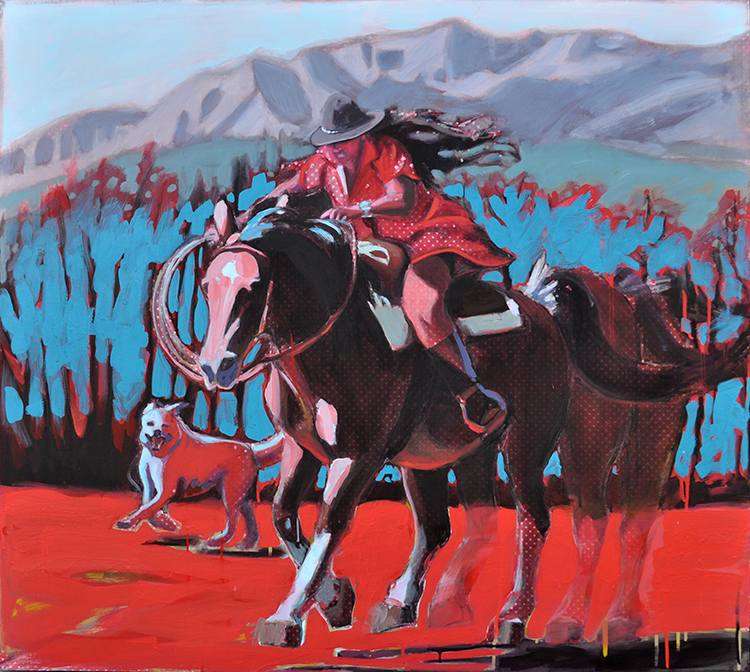
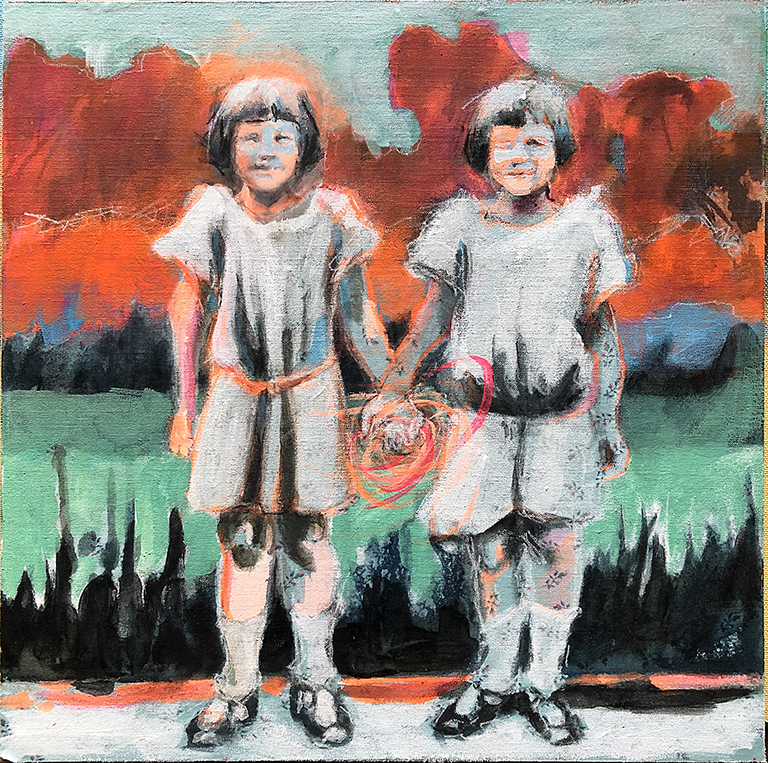
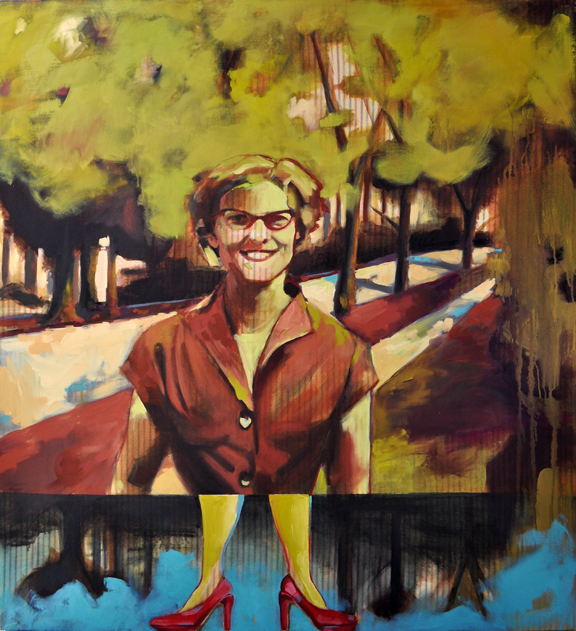


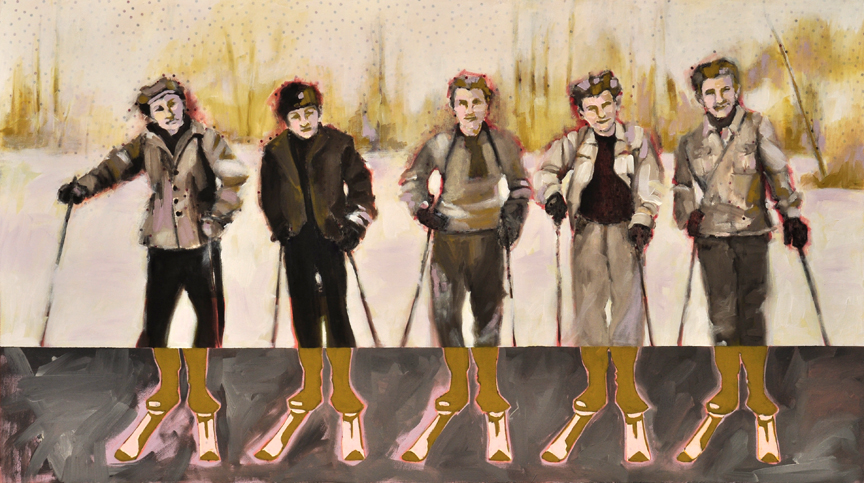
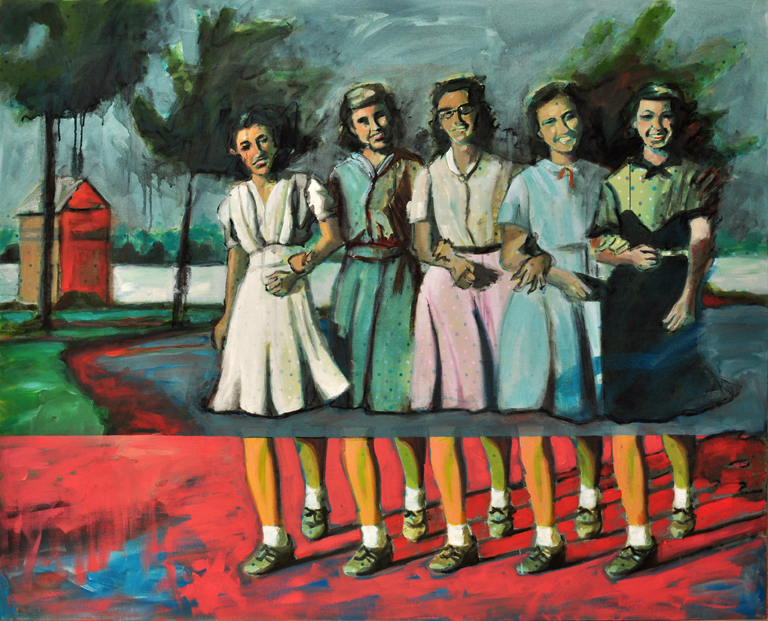
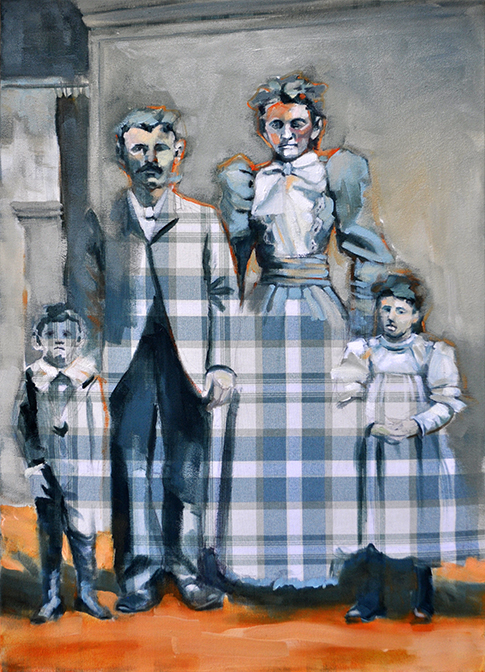
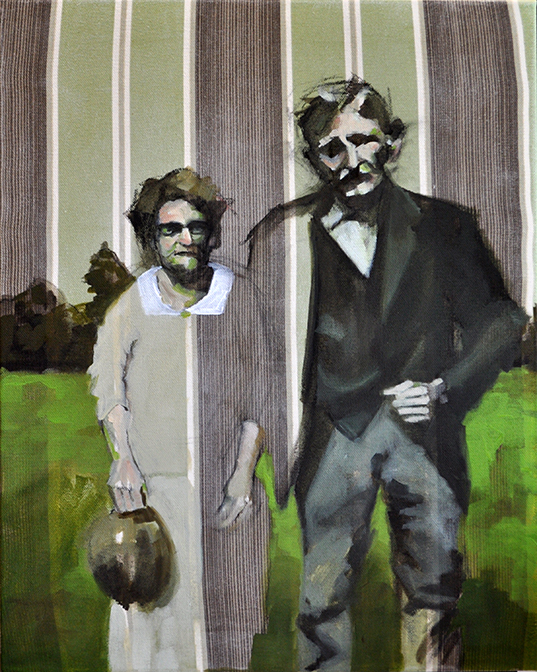

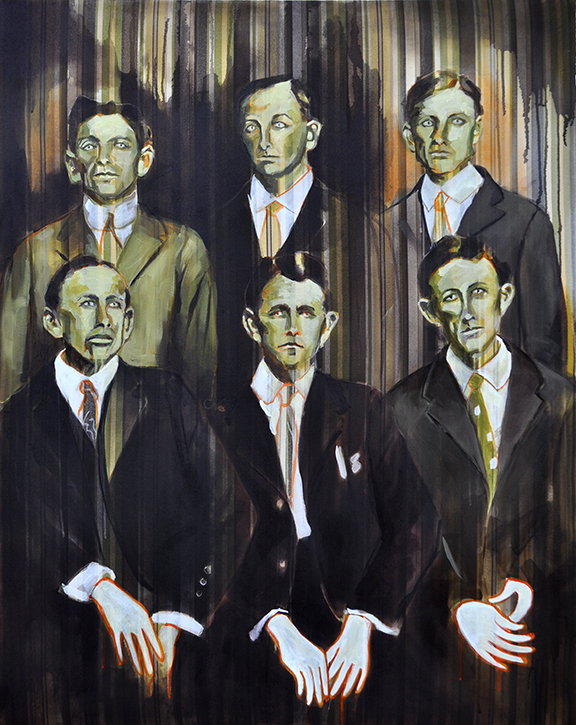
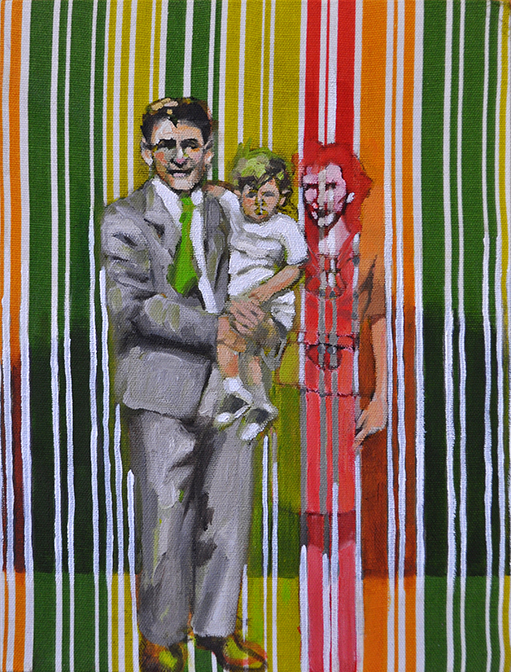
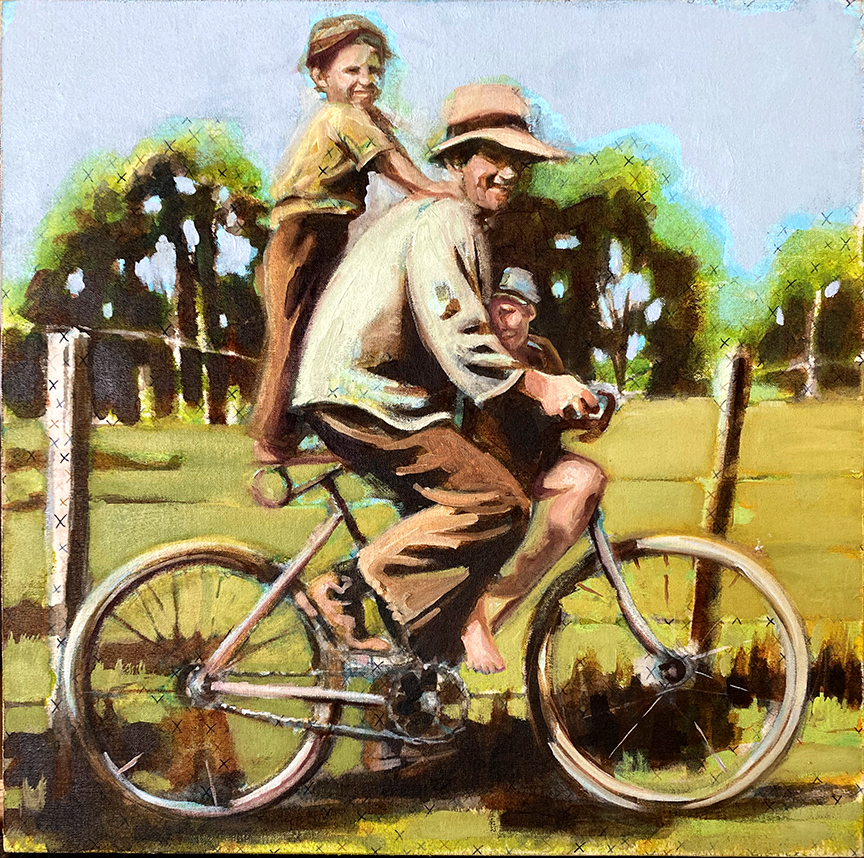
Artist’s statement: Domesticates explores the influence of relationships, especially the close, domestic bonds of family and friends, where the colors and patterns of our daily existence imprint themselves onto us, forming the person we become, the roles we play, and how we view the world.
Exposing the Sneaky Marmot
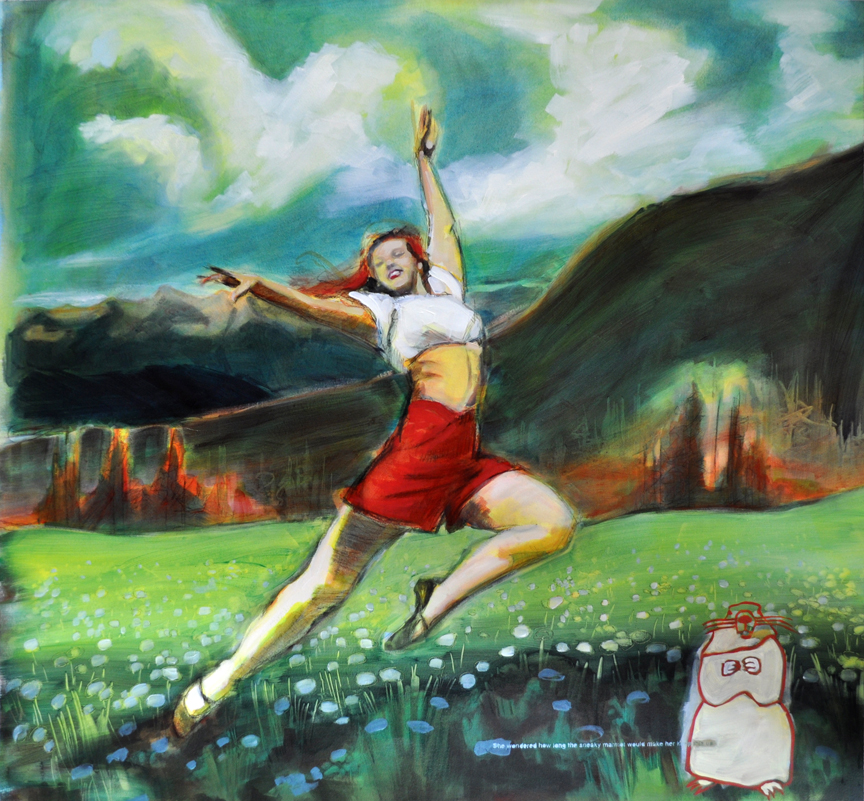
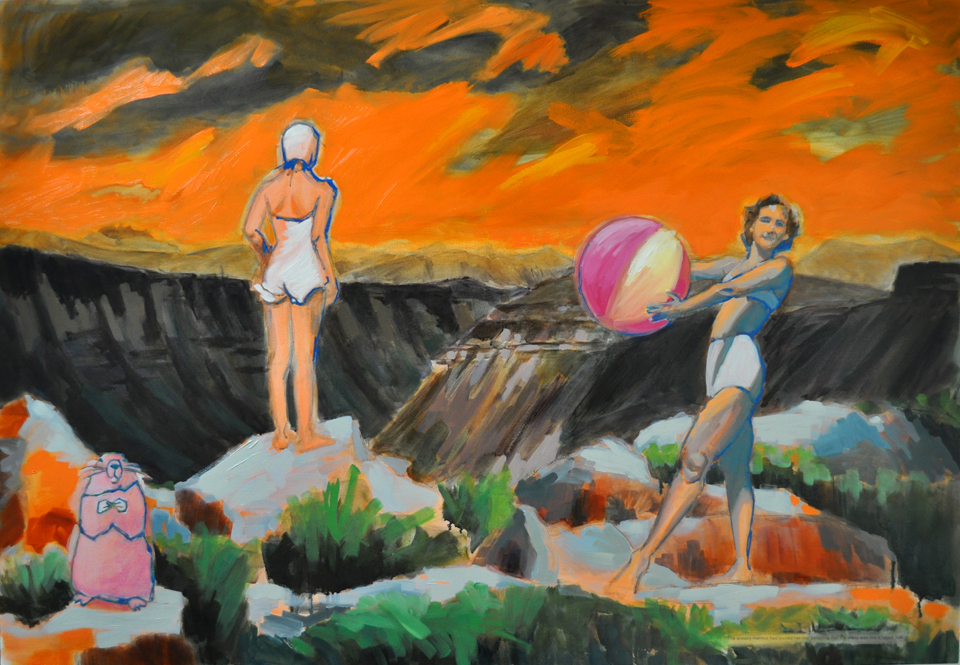
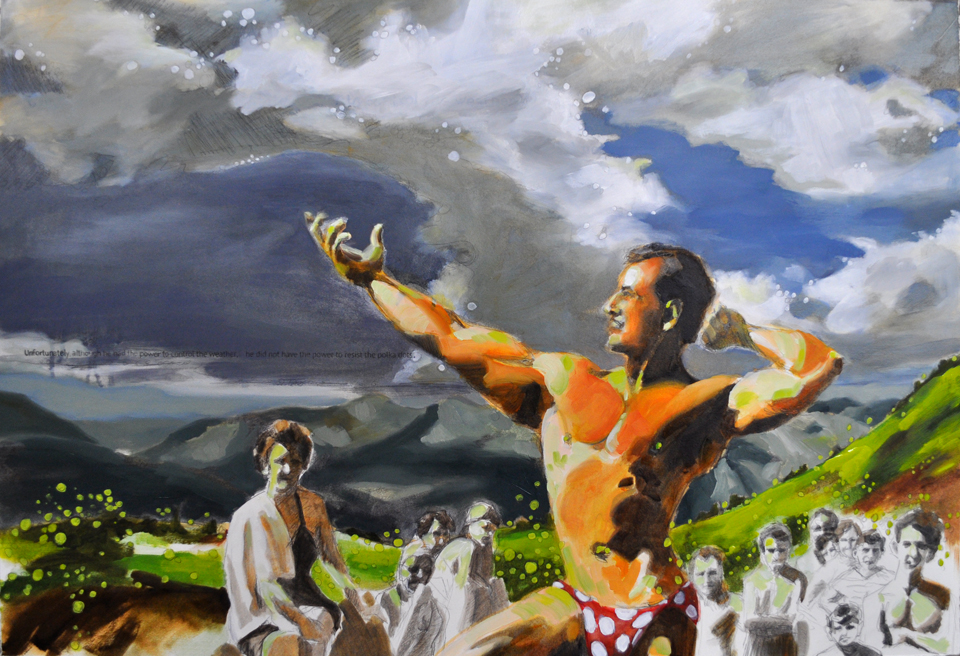
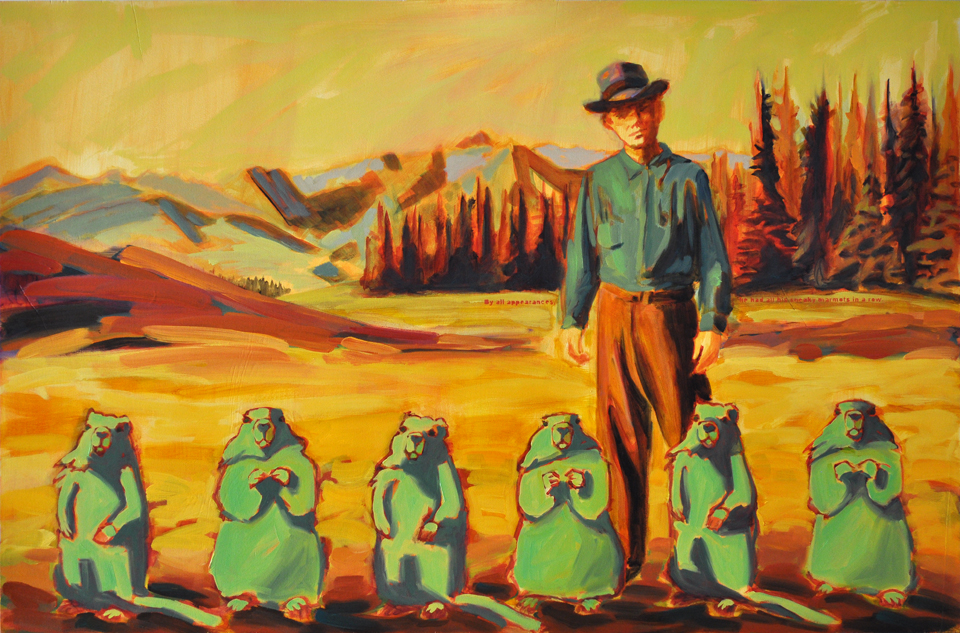


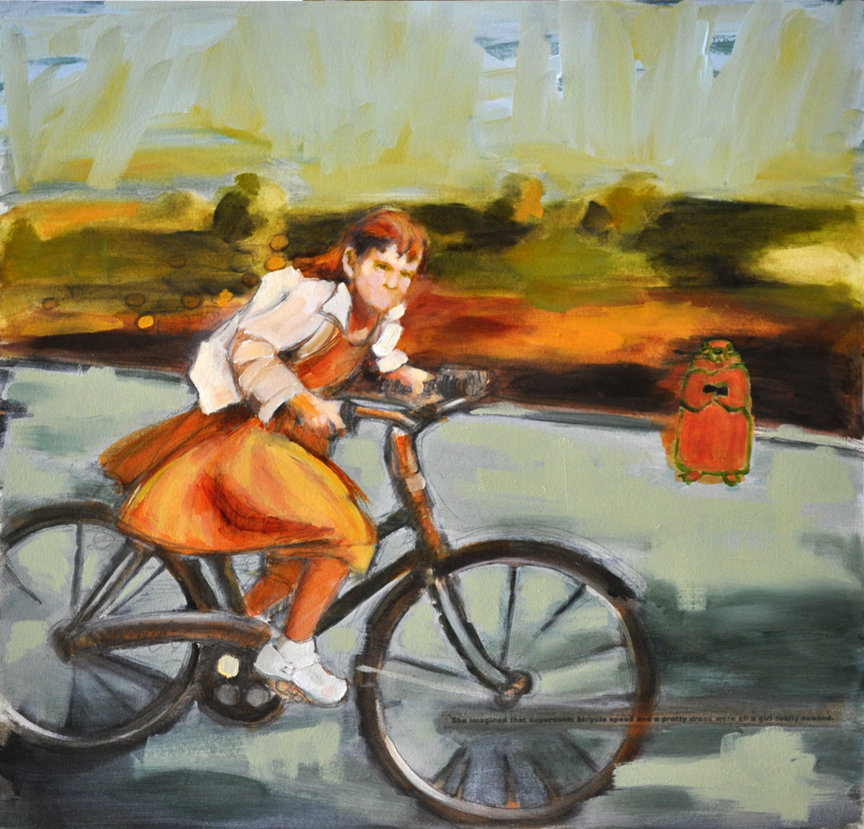
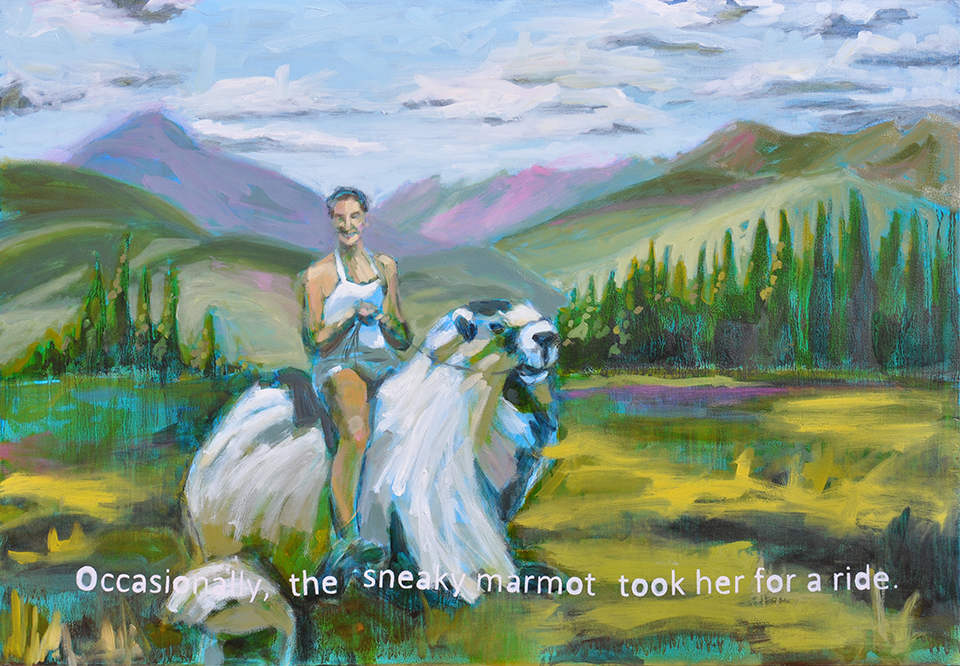
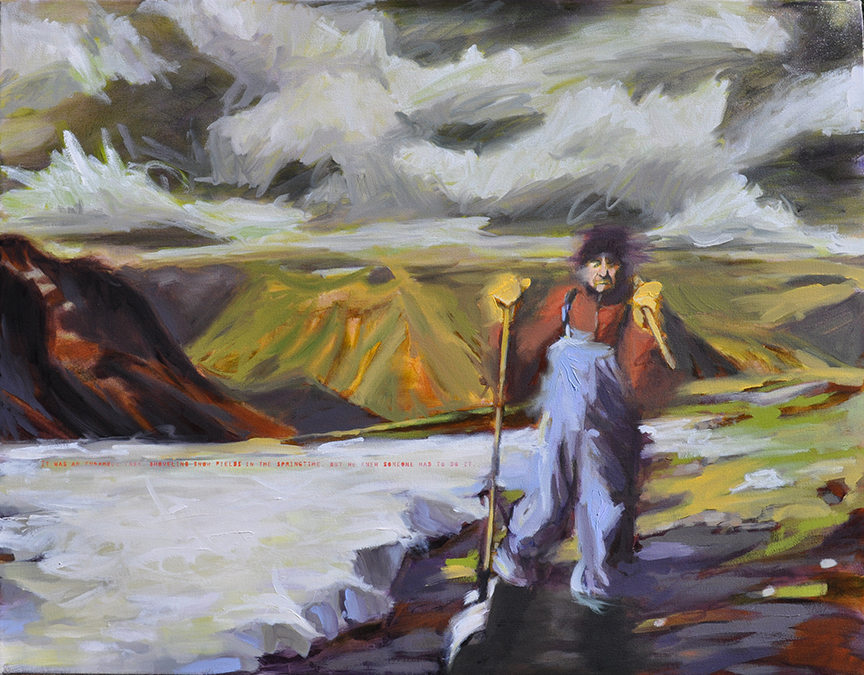

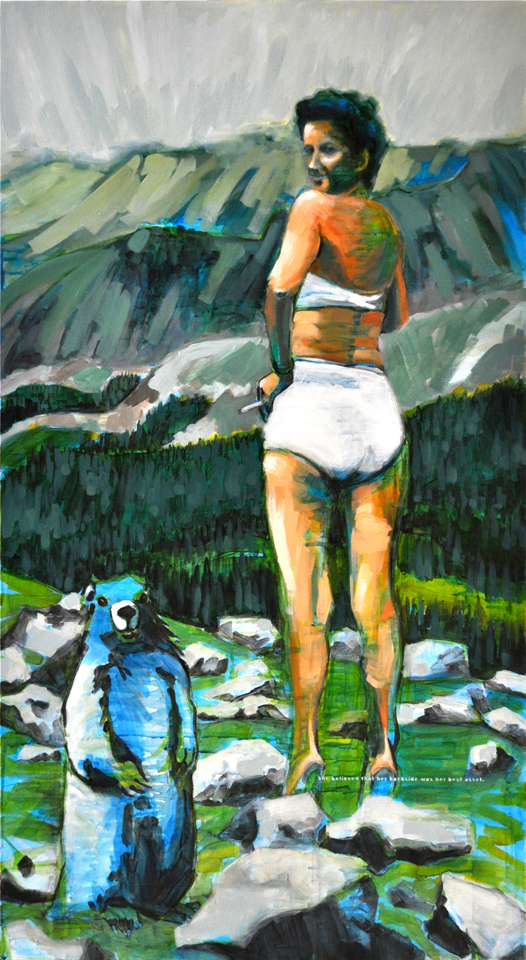
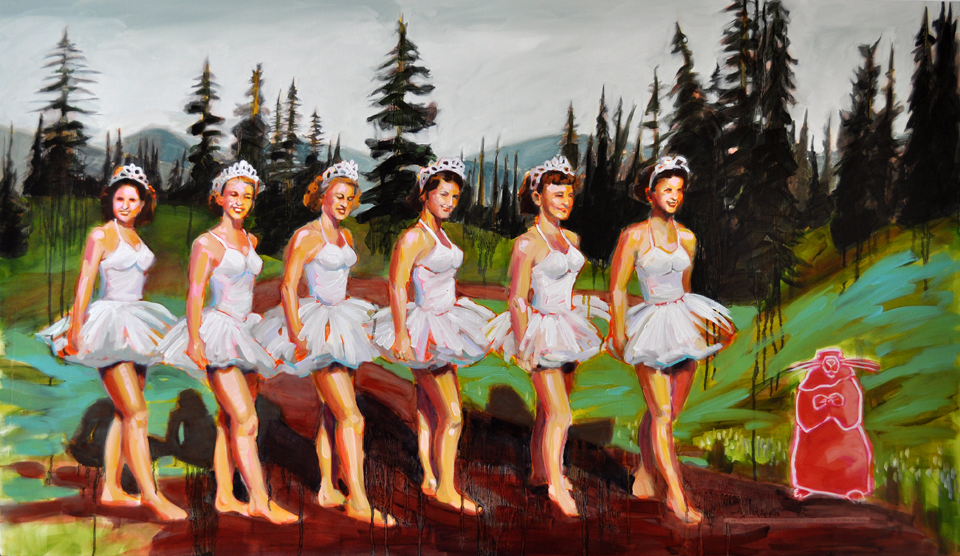


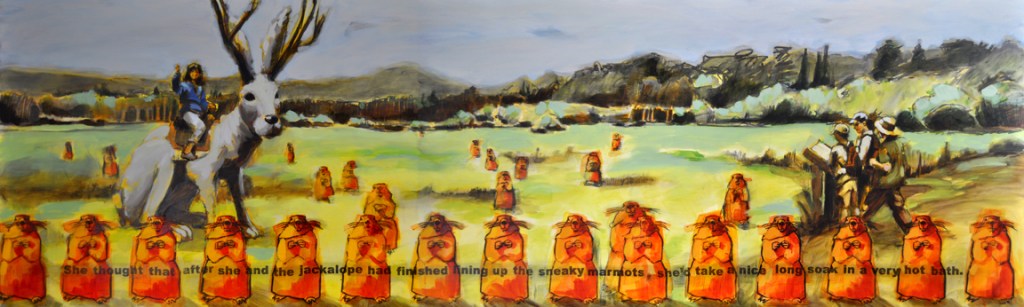
Artist’s statement: Sometimes, our beliefs about the world or ourselves don’t serve us well. False or misleading perceptions can, at best, lead us into harmless folly or, at worst, cause others and ourselves a lifetime of misery and heartache.
Exposing the Sneaky Marmot examines various forms of self-deception. The presence of a trickster marmot throughout the series embodies the tendency to be misled by our perceptions and beliefs. These mindsets are formed in childhood and carried into adulthood, often functioning below our conscious awareness.
I reference old photographs to evoke the temporal persistence of long-standing familial mindsets and use the landscape as a setting to represent the wild terrain of our subconscious mind. These paintings are twisted versions of grown-up dramas that are humorous on the surface but sometimes dark and insidious underneath, with far-reaching consequences.

 Tammi Brazee